Let’s be blunt, Idaho. You’re buying a lot of marijuana in Oregon, and it shows
Idahoans are supporting Oregon’s economy in a major way: It’s where they’re buying marijuana, because it’s legal there but not here.
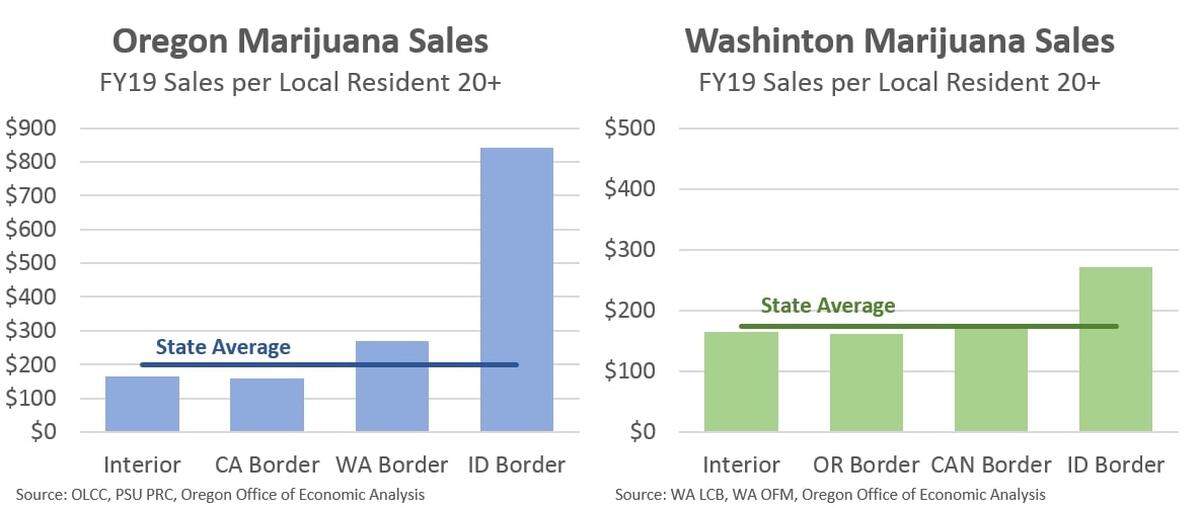
“In things you cannot make up, Oregon sales per adult along the Idaho border are 420% the statewide average,” wrote Josh Lehner in a report released Friday by the Oregon Office of Economic Analysis.
It’s not reefer madness — the analysis also showed stronger sales for Washington state along its border with Idaho in 2019 than along its borders with Oregon or Canada.
That’s because of the “border effect,” which happens when two neighboring jurisdictions set different rules for the same product, which may result in residents traveling to take advantage of relaxed restrictions. The border effect is particularly common among “vice industries,” Lehner wrote.
Idaho borders three states — Oregon, Washington, Nevada — that have legalized recreational marijuana sales, but not even medical marijuana is legal in the Gem State. Utah and Montana have medical marijuana sales, while Wyoming bans all cannabis.
About 75% of Oregon sales and more like 35% of Washington sales in counties along the Idaho border were caused by the border effect itself, rather than local socio-economic conditions such as income, number of retailers and tax rates, according to the report.
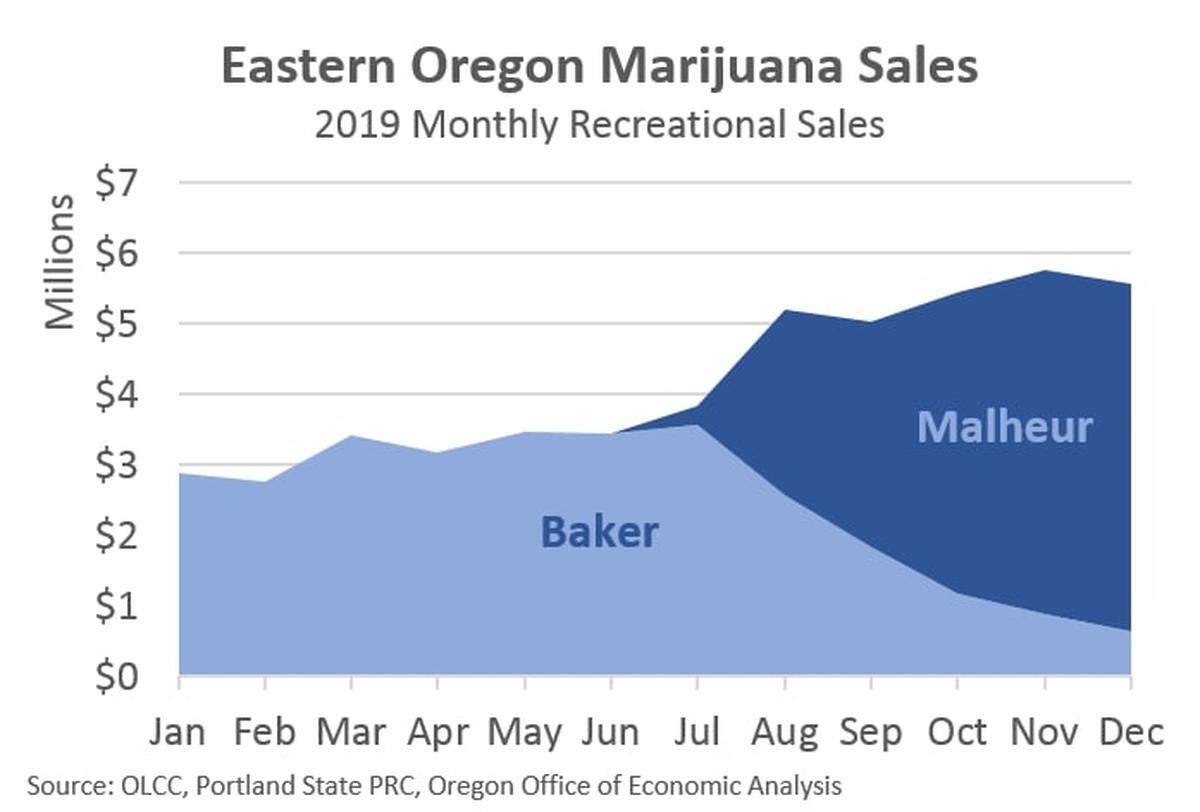
Perhaps unsurprisingly, the “border effect” also affected sales in different regions of Oregon. Until recently, the closest retailers to Idaho were located in Baker County. But last November, the city of Ontario in Malheur County — less than an hour from Boise on Interstate 84 — lifted a ban on marijuana sales. After new dispensaries opened there last summer, sales in Baker County dropped by 80 percent.
“Proximity or distance traveled matters as does product availability, prices, and taxes,” Lehner wrote.
According to the National Conference of State legislatures, medical marijuana is legal in 33 states and Washington, D.C., and 11 of those states allow recreational use.
In 2019, advocates for legalizing medical marijuana began collecting signatures with the hopes to get an initiative on the 2020 general election ballot, the Idaho Statesman previously reported.
This story was originally published January 17, 2020 at 3:49 PM.