Investors are running out of houses to buy in the Boise area. So they’re building their own.
In 2017, when Steven Hunt heard that a 74-house subdivision would be built near his house in Northwest Meridian, he didn’t think much of it. He didn’t bother to show up to the public hearing.
A few months later, Hunt learned the name of the developer: American Homes 4 Rent.
Hunt, the former president of his homeowners association, knew of American Homes. The company owns and rents two houses in his neighborhood.
“Those two have more violations than other homes in the subdivision, and they take longer time to resolve,” Hunt said in an interview.
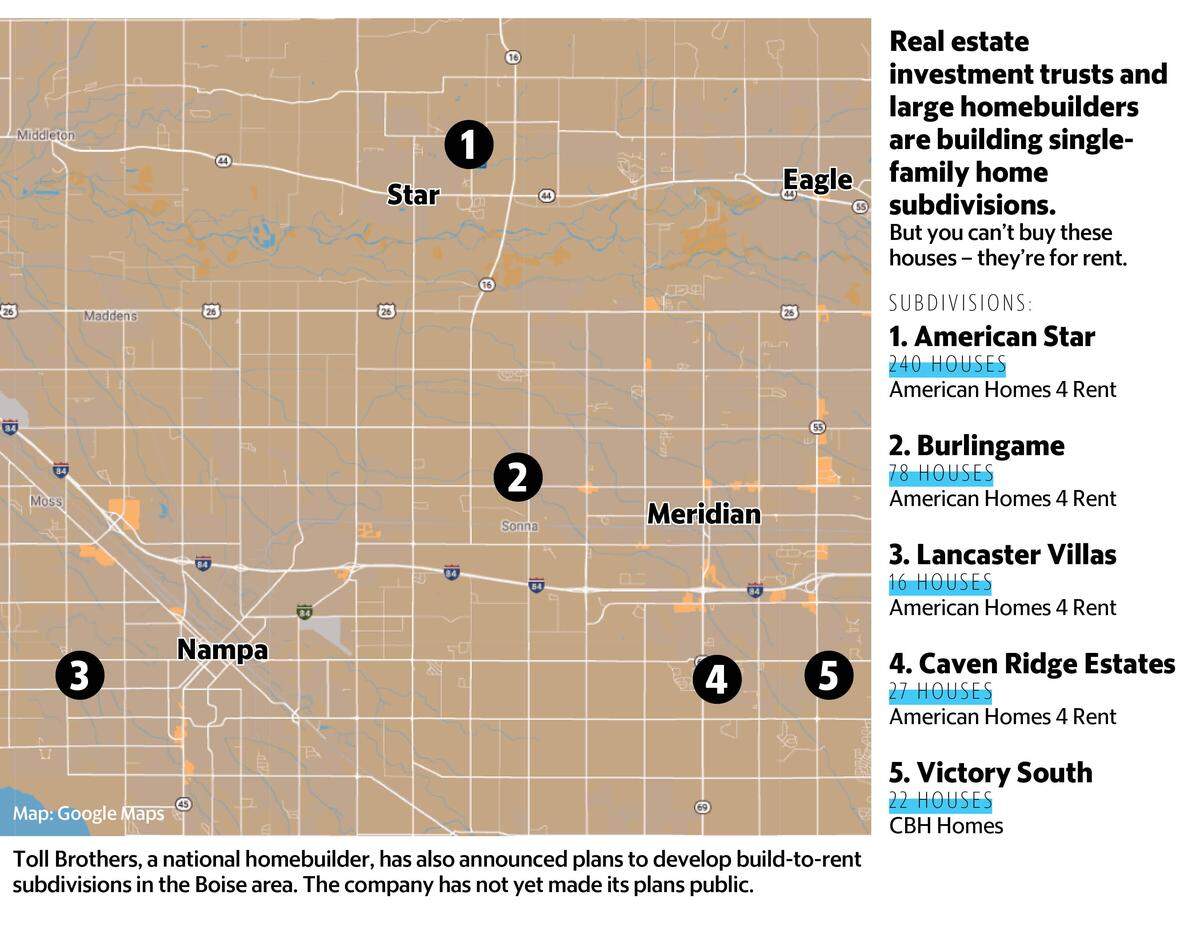
It was news to him that the Agoura Hills, California, rental company had gone from investing in older homes to developing new ones. The company is one of at least three that are building entire neighborhoods of single-family rental homes around the Treasure Valley.
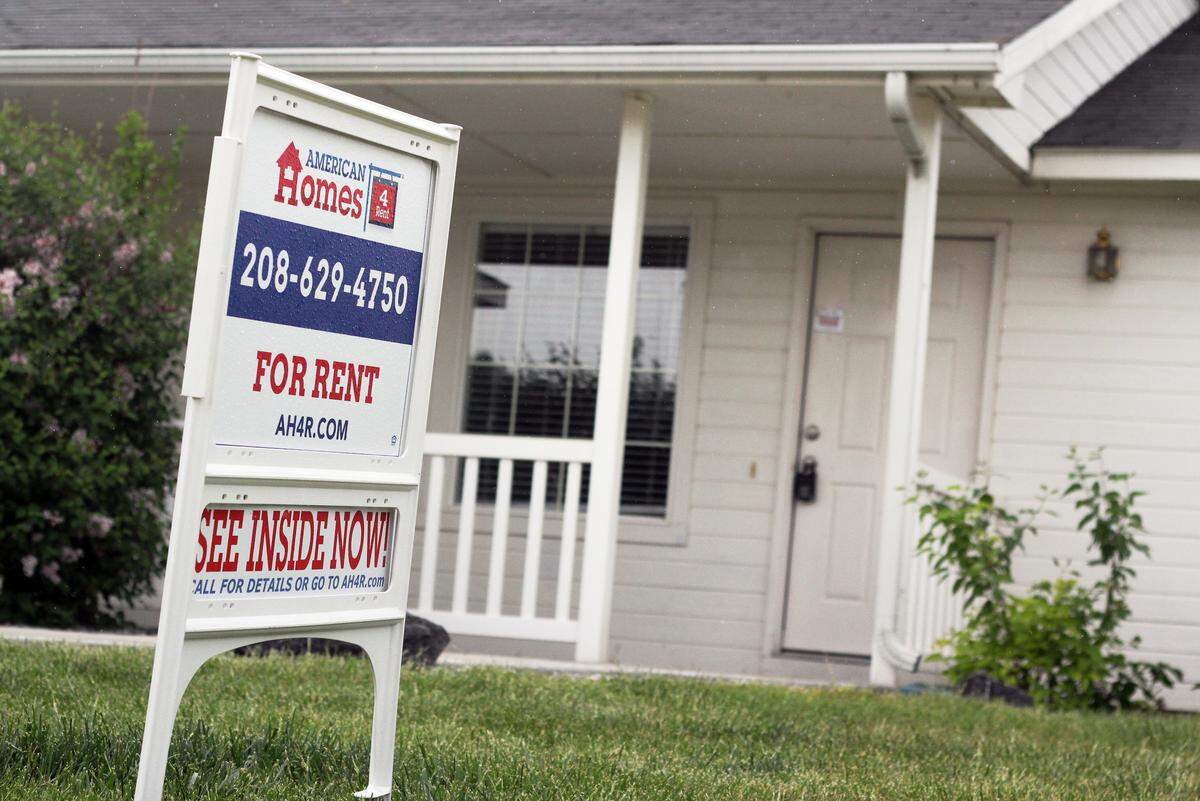
American Homes 4 Rent was born of the recession. When the housing market crashed, companies like American Homes and institutional investors bought up single-family houses in foreclosure and turned them into rentals.
Until recently, that model has worked. As of 2018, American Homes owned nearly 500 single-family houses spread across the Boise area.
But now institutional investors have run into the same problem as prospective home buyers: There just aren’t enough houses to buy.
So why not build the houses themselves?
American Homes, Toll Brothers, CBH build
In the Boise area, the build-to-rent market has exploded in the last year. American Homes has already built one new rental subdivision in Nampa, and has plans to build 240 single-family houses in Star and 100 in Meridian.
Last year, Toll Brothers — one of the nation’s largest homebuilders — announced a partnership with luxury rental community builder BB Living to expand into 10 new markets, including Boise.
And CBH Homes, which has for years dominated the Treasure Valley’s housing market, is building rentals, too. The units, which look just like the CBH houses for sale, will be rented out and maintained by CBH’s property management division, which was created last year.
Local housing advocates worry that trend comes when there’s already a shortage of affordable houses, which has pushed up housing prices. Between 2014 and the third quarter of 2019, the median price of a single-family house in the Treasure Valley increased 75%, to $303,100 from $172,900, the Statesman previously reported.
“We’re seeing a great need to purchase housing of around $200,000 or less,” said Zoe Ann Olson, executive director of the Intermountain Fair Housing Council. “There are simply not those homes to buy.”
Renters, investors ‘win in this market’
Dennis McGill, director of research at the boutique investment bank Zelman & Associates, said that’s why these build-to-rent communities can benefit both renters and investors.
“Everyone is winning in this marketplace, because we need more housing stock, particularly starter homes,” he said. “There’s not enough single-family housing to meet the demand.”
In the rental market overall, vacancy rates for the quarter ending Dec. 31 were less than 2%, according to the Southwest Idaho chapter of the National Association of Residential Property Managers. The same time last year, the vacancy rates were 3%.
“There’s not a lot of options, which is pushing our rent costs up,” said Andy Propst, CEO of the HomeRiver Group. The Meridian-based property management company’s clients include multiple single-family home investors.
But Olsen worries that investors building for themselves, rather than home buyers, could force more people into renting.
That’s what happened during the recession, when the housing crisis left many people with a foreclosure on their record and a poor credit history that made it hard to buy again. Between 2000 and 2017, The Boise metro area’s homeownership rate fell to 68% from 72%, according to the U.S. Department of Housing and Urban Development.
Rent increases, stagnant wages
Homeownership rates are back on the rise, but renters are facing steeper rent increases than ever, coupled with stagnant wages.
That makes it even harder to save, Olson said.
“If people are steered to renting, then they’re not building up down payments for their own house, the American dream,” she said. “They’re relegated to perpetually renting.”
Investors say that’s not necessarily the case.
“Our core demographic is 38 with about two kids,” said Matt Blank, who co-founded the luxury rental community builder BB Living in Phoenix in 2011. “What we find is there are renters by choice and there are renters by necessity. We get both.”
There are many reasons to rent rather than buy, Propst added.
“These developments cater to people who don’t want to put down their roots and buy a house, but they want something more than an apartment,” he said.
The rental subdivisions offer a suburban lifestyle that’s highly sought after. Builders choose areas in desirable school districts. The houses are around 1,800 to 2,000 square feet each. The communities are built with the typical amenities of a subdivision, like a pool and open space.
“They can get the same quality of life by renting,” Blank said.
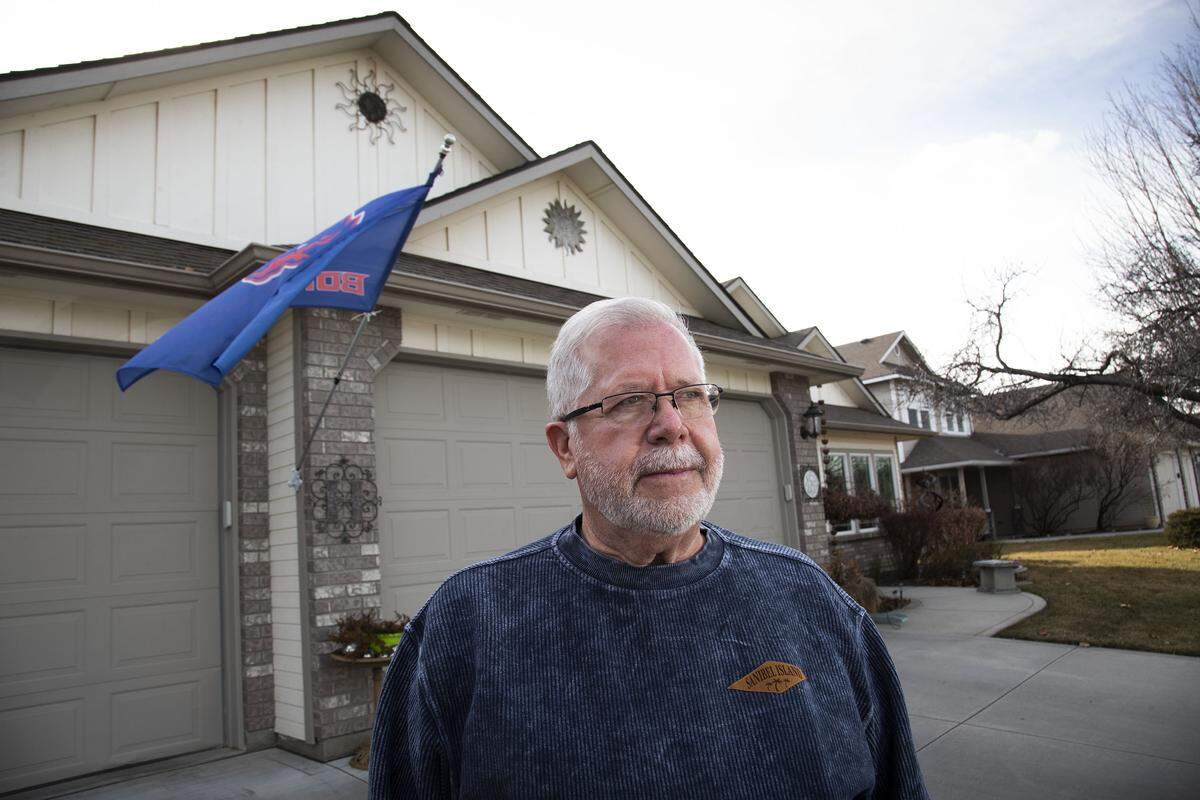
Hunt, though, isn’t so sure. He looks out at the American Homes 4 Rent subdivision under construction near his house and worries that the out-of-state investors won’t hold renters to the same standards that a homeowners association would.
As president of his HOA, Hunt struggled to track down a representative from American Homes when a tree on on one of the company’s properties fell down, damaging a fence owned by the homeowners association. In the end, the HOA had to pay for the damage after fighting with American Homes, Hunt said.
“We should have a local phone number if there’s a problem,” Hunt demanded of the Meridian City Council earlier this month.
He also asked the council to create rules that would ensure the investor-owner communicates city code requirements to new renters. A city attorney said Meridian already has an internal list of phone numbers for city land owners that city officials can call if problems arise.
Maintenance responsibilities are divided between renters and investors differently, based on the community.
In CBH Homes’ Victory South community off Victory and Eagle roads, renters maintain their backyards and CBH maintains the front yards. In BB Living’s communities, an on-site superintendent helps take care of any maintenance issues, from the toilet to the refrigerator, Blank said.
Renters may pay a premium to have those responsibilities taken care of by a corporate landlord.
Of course, building rental properties en masse also lowers costs for investors. Investors buy land in far-out Boise suburbs because it’s cheap, even if it’s not where renters work.
Maintenance is also less expensive because the houses are new, each one built to the same specifications with the same appliances.
There’s also the ease of scale. Rather than maintaining hundreds of properties spread out across the city, like the two in Hunt’s neighborhood, the houses are located close together.
Investors also say that turnover rates are lower for single-family than apartments, which helps reduce costs.
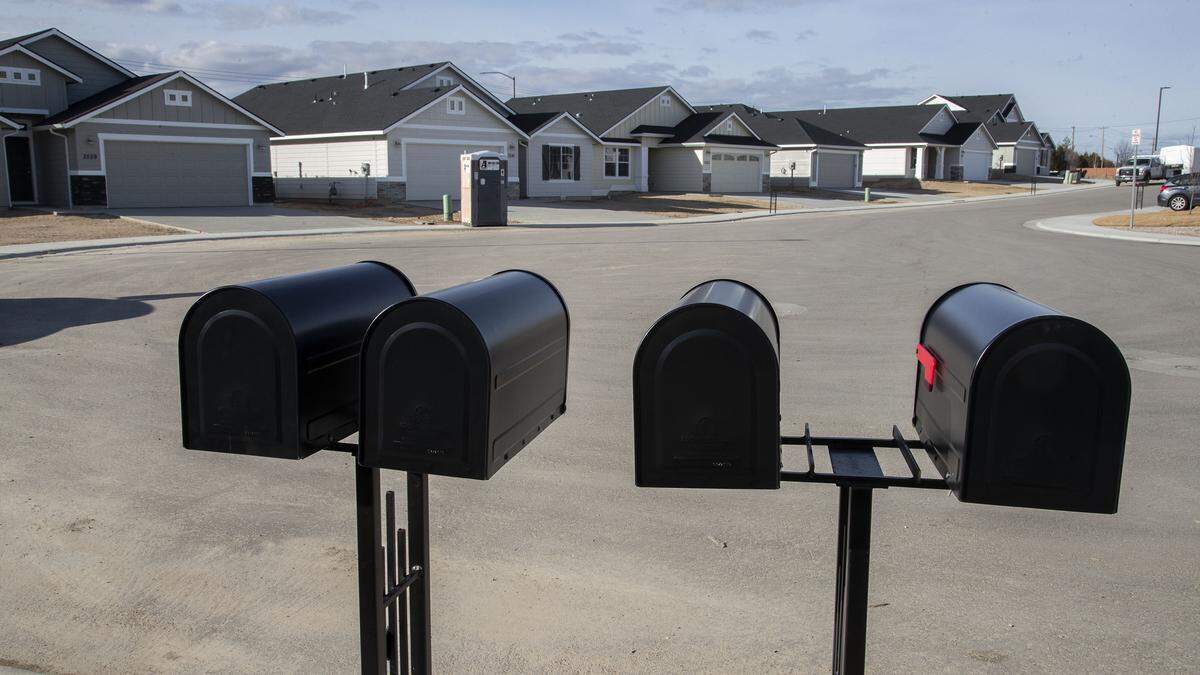
Plus, landlords can charge higher rent for a new build. One of American Homes’ 2,500-square-foot houses in Nampa rents for $1,850 a month.
Compare that to buying a new CBH Home of the same size in Nampa, which sells for $329,000. With a down payment of $11,515 (3.5%), a 30-year mortgage and a 3.5% interest rate, the monthly payment, including taxes and insurance, would be $1,920.78, according to a calculation for the Statesman by Zions Bank.
Olsen, of the fair housing council, scoffs: “We’re replacing a home purchase with mass rentals at the rate of a mortgage.”
She isn’t the only one concerned about that. Corey Barton, owner of CBH Homes, said he hopes to help people build wealth in a home, even if they start out as renters.
“As time passes, we’ll be hoping to help those renters turn into buyers,” he said in a phone interview. “Ultimately, we do believe that home ownership is the way to start out your life, by putting money into a property and your home.”
That could be the ultimate end-game for many of these investors, said McGill, the investment-bank researcher. As the value of the home appreciates, and the property becomes too old to maintain inexpensively, owners can eventually sell to an owner-occupant.
“You can take a rental home and turn it into an ownership overnight,” he said. “With apartments, that’s basically an apartment forever.”
The returns can be huge, according to Propst, the property manager. “If our appreciation continues to go up, someday those rental communities are going to be worth a lot of money,” he said.
For now, expect to see more build-to-rent neighborhoods cropping up.
“It’s good that there’s a product that allows a renter flexibility,” Propst said. “But it’s tough: A lot of the equity that’s being built in that home … it’s not going to the mom and pop. It’s going to the big investment machine.”
An earlier version of this article included an estimate of the monthly payment on a 30-year home mortgage that did not include taxes and insurance. The story has been revised to include those.
This story was originally published February 9, 2020 at 6:00 AM.