BoDo owner plans to bring the next big thing in the culinary world to Boise
For years, Boise’s food scene was dominated by chains the likes of McDonald’s, Bob’s Big Boy and Perkins ‘Cake & Steak.
More recently, Boise notched its belt as a food town with Richard’s Fork and State & Lemp, where Chef Kris Komori earned three James Beard Award nominations before the restaurant was sold and later closed.
And, now, the owner of Boise’s BoDo commercial district is making plans for Boise to join one of the fastest-growing trends in the culinary world: food halls.
BoDo includes two buildings on both sides of South Eighth Street between Front and Broad streets anchored by P.F. Chang’s and the Edwards Boise Downtown theaters. It also includes ground-floor business sites under the public parking garage across Broad Street from Edwards.
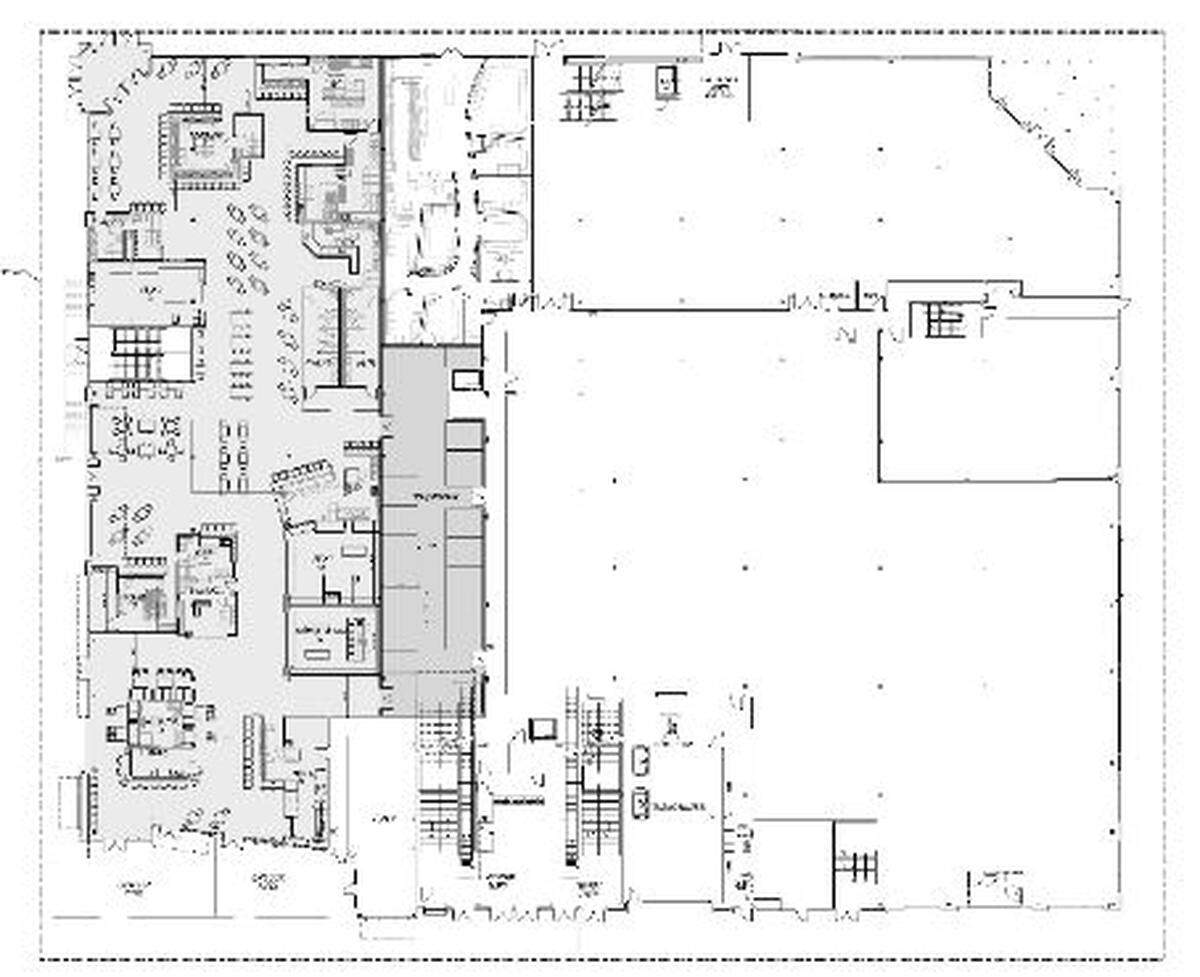
Hendricks Commercial Properties, a Beloit, Wisconsin, company that bought BoDo two years ago, plans to open a food hall on the ground floor of its building at South 8th and Front Street. Fourteen food vendors will operate along a 16,000-square-foot corridor.
“We’re working on where the old Urban Outfitters space was and converting that whole section basically from Front Street all the way to Broad Street into a food hall,” Rob Gerbitz, Hendricks’ CEO, said by phone.
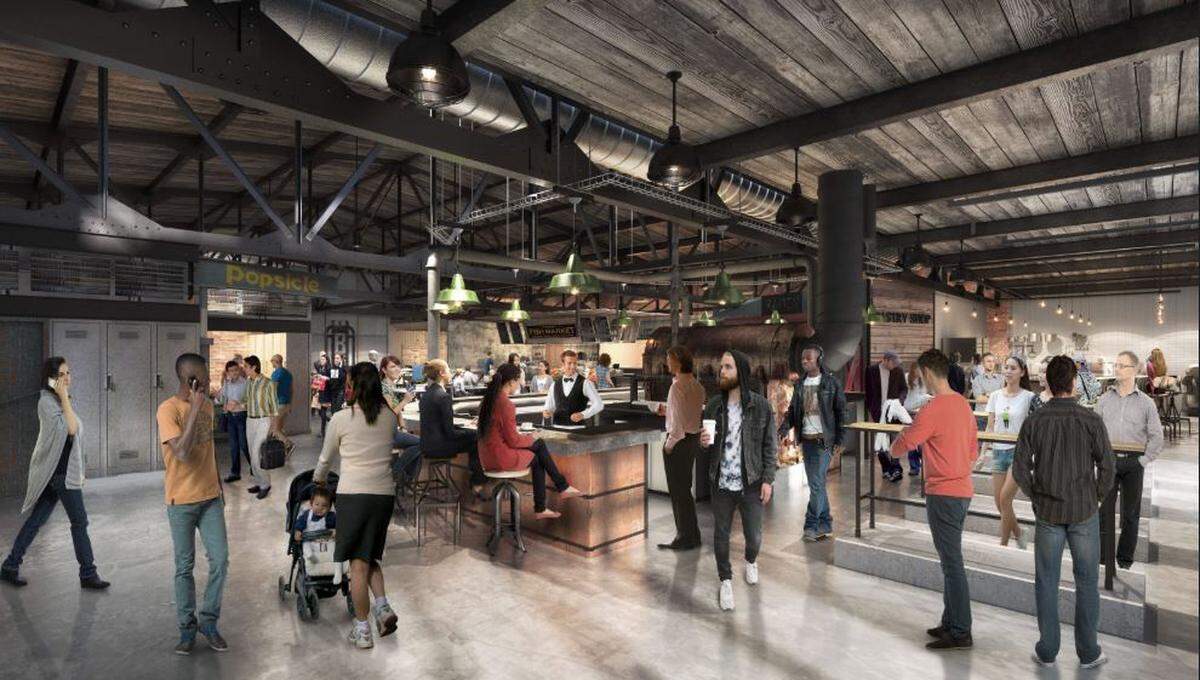
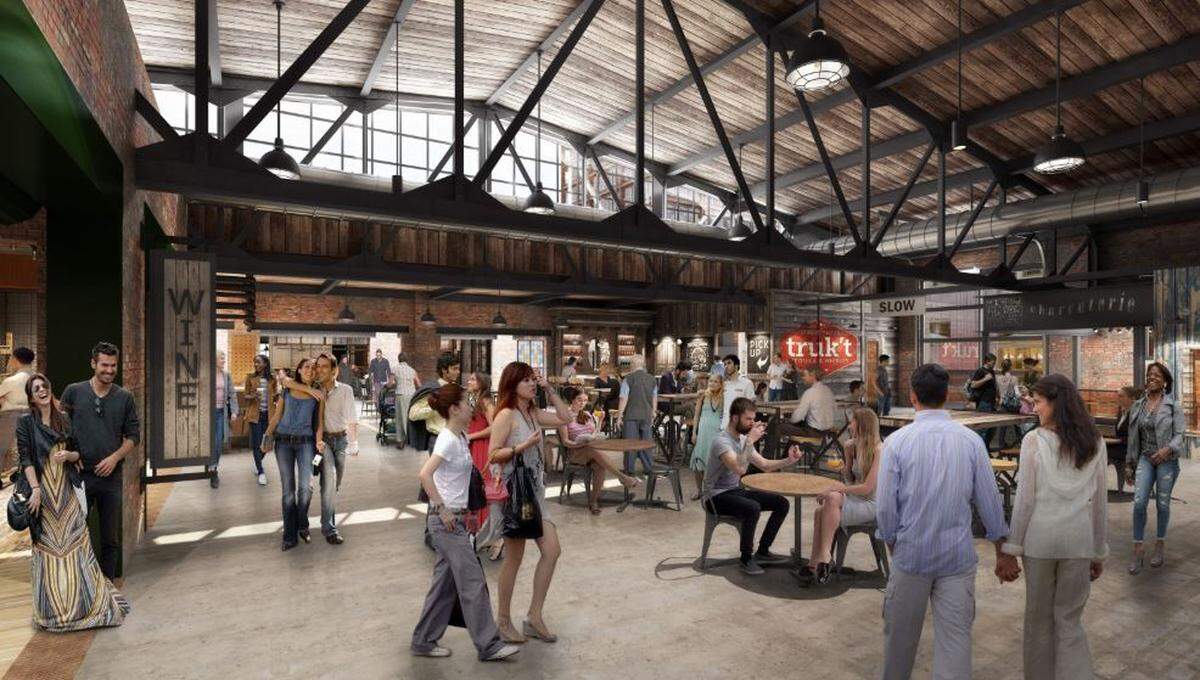
Food halls are a variation on mall food courts, but with no mall, fewer chains and an urban feel. So don’t call it a cafeteria. Or come looking for a Whopper, an order of Taco Bell’s Nachos BellGrande or a Popeyes chicken sandwich.
The BoDo hall will emphasize local chefs and small regional companies, Gerbitz said. Spaces will range from 300 square feet to 1,400 square feet.
The food hall could partially serve as an incubator of sorts, Gerbitz said.
“If there’s a chef that is ready to go out on her or his own, they could come in there at a relatively low cost and be able to really start experimenting with what they want to try and create,” Gerbitz, said.
The STIL ice cream shop and Caffe D’arte, which currently operate in the building, will remain and will open into the rest of the hall.
Tables for eating will be spread throughout the space, instead of bunched together as in a cafeteria. Some of the restaurants may also offer counter seating, he said.
In 2000, there were only about 50 food halls in the U.S., including ones at the Pike Place Market in Seattle, the Grand Central Market in Los Angeles and the Lexington Market in Baltimore.
The concept has exploded over the past decade, with many food halls heavy with ethnic offerings. Chicago has 10 food halls and New York has 29. By the end of 2020, there are expected to be 450 food halls across the country, according to commercial real estate brokers Cushman & Wakefield.
“At a time when headlines about the retail sector remain dominated by stories of closures and bankruptcies, food halls have emerged as one of the hottest growth trends,” Cushman & Wakefield wrote in a report published in May.
They’re attractive to new restaurateurs, because a food hall outlet has lower startup and operating costs than a standalone restaurant or even a food truck, the report said.
While food hall vendors typically pay a higher percentage of their gross sales toward rent and usage fees — 20% to 25%, compared with 6% to 10% for standalone restaurants — those expenses are typically offset by lower labor, operations and common-area costs, the report said.
Food hall restaurants feature counter service, so there’s no wait staff, just order takers, servers and kitchen staff.
“It’s really a wonderful way to go,” Gerbitz said. “Certainly they’re going to have some risk, but it’s less daunting than going into a 4,000-square-foot space on their own and trying it for the first time.”
Gerbitz said it is too early to know how much Hendricks will spend to renovate that portion of the building or what vendors will pay. The company hopes to begin work by next May and finish a year later, he said.
Hendricks is developing a food hall at its Bottleworks District in Indianapolis. The Garage Food Hall is expected to open with 26 vendors in late summer 2020. Twenty of the spaces have already been filled.
The offerings will include wood-fired pizza, Brazilian kabobs, lobster rolls and one restaurant offering a “mash-up of Palestinian and Filipino influences in open-face sandwiches,” according to the Indy Star.
One of the restaurant operators is from Chicago, nearly 200 miles north of Indianapolis, but the rest are from the Indianapolis area, Gerbitz said.
“That’s the same thing we want to do in Boise.,” he said. “Our goal is to always go with local people and bring them into the mix.”
The BoDo food hall, which hasn’t yet been named, is expected to bring a significant increase in foot traffic to the entire neighborhood. That could benefit other nearby shops and restaurants, including BoDo’s P.F. Changs and Meraki Greek restaurant, across 8th Street from the proposed food hall.
The Milwaukee Public Market in Wisconsin, which offers “a really, really great experience,” Gerbitz said, draws about 1.6 million visitors a year.
“Now Milwaukee’s population (about 600,000 vs 230,000 for Boise) is quite a bit bigger than Boise, but we’d certainly like to get a million-plus coming into here,” he said.
Earlier this year, a Hendricks sister company, Rockton Riverview LLC, bought The Owyhee, a commercial and apartment building built in 1910 as a hotel. It also owns the parking lot south of the building.
Hendricks buys house, parking lot on Grove Street
Hendricks also bought a 1910 house at 1221 W. Grove St. that houses Your Image Barber Styling and Louie’s Barber Salon. It also bought the parking lot east of the house used each March by the Treefort Music Fest.
“Right now, we don’t have any plans for them,” Gerbitz said. “We’re looking at the first and second quarter next year to come up with some ideas on what we’d like to do.”
This story was originally published November 26, 2019 at 4:07 PM.