Critics say BSU diversity programs don’t work in real world. Top Boise employer disagrees
In the middle of a summer roiled by debates over the value of diversity and inclusion programs at Idaho universities, a Micron Technology announcement with international implications made waves locally.
Boise-based Micron Technology hired Sharawn Connors, the company’s first vice president of diversity and inclusion, in August, continuing a push to create a diverse workforce across an international company with thousands of employees in 18 different countries.
“Diversity is an important aspect of Micron’s business success,” Micron president and CEO Sanjay Mehrotra told the Statesman during a November interview.
Just a month before that announcement, 28 Idaho Republicans wrote to Boise State University President Marlene Tromp, urging her to roll back a series of campus diversity and inclusion efforts because the programming was antithetical to “the Idaho way.” Some critics claimed the programs were discriminatory, or at the very least irrelevant to the way the corporate world operates.
At the time, executives from Micron — which makes semiconductors — made no attempt to link the announcement to the debate playing out on Boise State’s campus. That debate will likely resurface in the 2020 legislative session, which convenes Jan. 6. But while Republican legislators may be gearing up for a fight on Idaho college campuses, top Micron executives say expanded diversity programs and inclusion efforts is a “business imperative,” especially at their Boise headquarters.
Diverse and inclusive perspectives in the workplace drives innovation and collaboration, executives said, especially in the tech world. That could mean eliminating persistent racial “blind spots” in technology — like artificial intelligence systems that struggle to recognize non-white faces — or building an open-minded, forward-thinking workforce used to collaborating with different people from different backgrounds. A 2019 Wall Street Journal review found that the most diverse and inclusive companies — with representation for women, age and ethnic diversity and proactive diversity programming — tend to outperform others without those features.
Executives, including CEO Mehrotra, said Micron’s commitment to creating diverse and inclusive environments for their employees extends to the communities where they live and work, too.
“The whole discussion of whether diversity is important or not is kind of a strange discussion for most of us of Micron who just move forward knowing that we have to have an environment that is very diverse for us to even compete in the world that we live in,” said Scott DeBoer, the executive vice president of Micron’s technology and products based in Boise. “And certainly we’re very supportive of Boise State in many ways, including their focus on diversity and inclusion.”
How — and why — Micron invests in diversity
Micron’s first annual diversity report, published November 2018, showed a company still a long way from its ambitious goals for a diverse workforce, something Micron leaders acknowledge readily. Despite an expanded focus on female participation in STEM careers, women comprise just 30% of Micron’s company-wide workforce. About 70% of all U.S. employees are white, and those gender and racial gaps widen further in senior leadership roles and in Micron’s engineer workforce. The 2019 diversity report is due to publish the first week of December.
Micron spokeswoman Erica Pompen said the company doesn’t break down gender or ethnicity numbers for local work sites. However, more than 60 countries are represented in the nearly 6,000 people working at Micron’s Boise headquarters
“You can never move the needle as quickly as you want, and it just has to be a constant focus,” said April Arnzen, senior vice president for human resources. ”The more diverse a company is, the better the innovation and the stronger the business results.”
Connors, the new VP for diversity and inclusion, is based in California’s Bay Area. Just a few months into her new role when she spoke with the Statesman in October, Connors said she spends a significant portion of her time meeting with company leaders, recruiters and managers to implement and refine inclusive policies and procedures. Each location has different diversity and inclusion goals, and Connors said Boise is focusing on further ethnic and gender diversity, while also maintaining a strong intergenerational workforce. Providing “outstanding” opportunities for veterans is a key Boise focus, too.
“It’s one thing to say, oh, we’re going to do some (diversity and inclusion) activities,” Connors said. “But it’s very different to start to bake that into the talent life cycle at a company to start having more of a business impact.”
To recruit a diverse workforce, Arnzen said Micron relies on a two-pronged approach. Nationally, Micron focuses significant recruiting at schools with traditionally underrepresented student populations, like historically black universities and women-only colleges. Locally, Micron recruiters draw heavily from student groups for diverse populations, such as Boise State’s chapter of the Society of Hispanic Professional Engineers and others — including some still drawing lawmaker criticism.
“I certainly don’t want to script their strategy,” Arnzen said, when asked if Micron wanted Boise State to continue diversity and inclusion programming. “But do I hope they have a strategy and invest? Absolutely, and our expectation is that all of the universities that we partner with have that focus.”
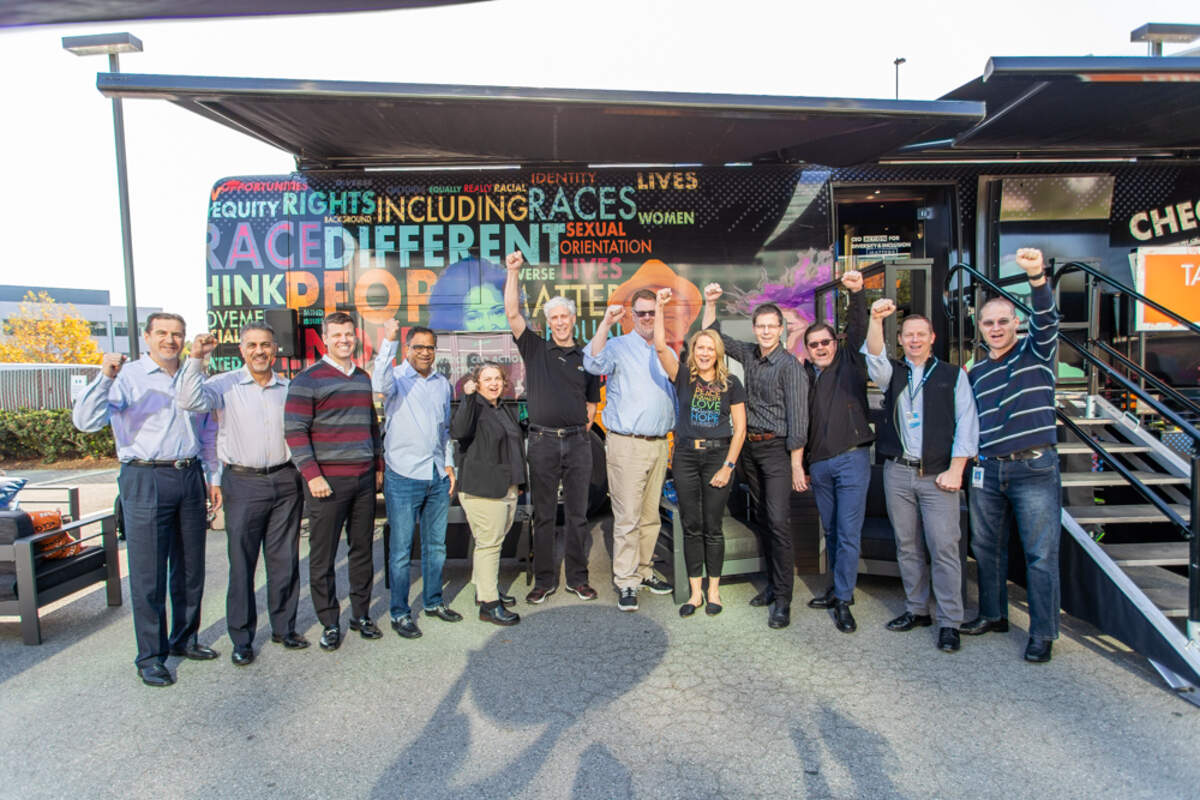
Ultimately, Micron leaders say the company invests in diversity to make Micron an attractive and welcoming place for talented recruits and to stay at the forefront of a competitive industry. Connors said the company encourages the growth of Employee Resource Groups at each site, which allows employees from common backgrounds to gather. The Boise headquarters has eight different groups, including one specifically for LGBTQ employees.
A diverse workforce with varying backgrounds and interests are naturally more innovative, executives said. In the rapidly-evolving technology sector, innovation is one of the only thing that keeps companies like Micron competitive. Setting goals and hoping things change isn’t as effective as developing plans and company mandates to make those goals a reality, Mehrotra, Arnzen and Connors told the Statesman.
“I do believe that in any environment when diversity is underrepresented, then it is important to nurture that diversity and to create an environment that encourages diversity,” Mehrotra said. “And, of course, doing it in a fashion that you don’t become exclusive to any particular group. But diversity and inclusion and equality should not be taken for granted when it is underrepresented.”
How does Micron encourage diversity, inclusion in Idaho?
At the publication of last year’s diversity report, the Micron Foundation — the company’s nonprofit arm — also announced an intention to donate $10 million to initiatives and programs that support underrepresented groups, especially in technology and engineering. Dee Mooney, executive director of the Micron Foundation, said that means they especially want to support programs that open opportunities for students from communities that have not traditionally filled high-tech jobs, like women, African-Americans and Latinos.
“We really are excited about getting the next generation of innovators and scientists working in the world, and we hope that they have an understanding and appreciation of diverse backgrounds and diverse thoughts,” Mooney said. “We want to make sure that we’ve got that next group ready to go and solve all the world’s problems.”
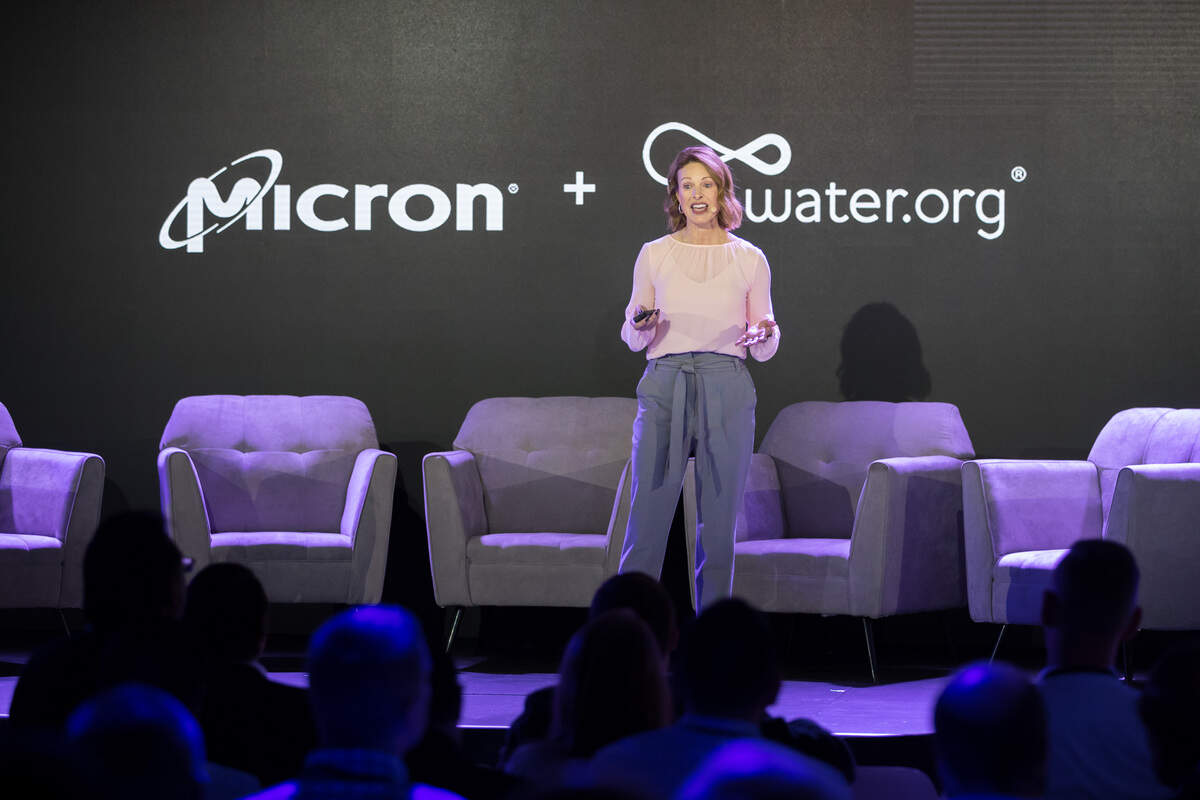
Pompen, the Micron spokeswoman, said Micron Gives efforts reached more than 25,000 students in the Treasure Valley over the last three years, often giving them exposure to STEM careers or science education they might not have otherwise learned. Micron’s STEM outreach efforts range from sending engineers to speak to classrooms to hosting coding workshops at the Idaho Hispanic Youth Leadership Summit, which Micron also sponsored for several years.
Micron’s SpecTek workgroup also adopted Nampa’s Snake River Elementary School, supporting the school financially and providing interactive science lessons for all students. More than half of the students there are Latino.
Mehrotra said that’s all part of Micron’s larger goal of creating diverse pipelines of engineering and technology students at the local universities in the communities where Micron is based. He mentioned how Micron encouraged the initial creation of a position for a director of engineering diversity at the University of Idaho and gave a grant to Boise State’s College of Engineering for a similar program.
“So these are various ways of showing our engagement in the community and our leadership in displaying our pride in supporting diversity, equality and inclusion,” Mehrotra said. “... we want to make sure that people think about what diversity means to that particular local population.”
But Micron leaders said the company and its employees — arguably one of the local workforces that most significantly contributes to Boise’s ethnic and national diversity — have long been dedicated to making the city and state they call home a welcoming place for all people. Like many others in Boise’s business community, Micron Technology is a sponsor of the Boise Pride Parade. The Boise headquarters flew the pride flag for the first time in 2019, Mehrotra said, after the request of the LGBTQ employee resource group.
“Micron — as a global leader and certainly as a business leader in Idaho — absolutely continues to support the diversity related programs within the state of Idaho, as well as all across the globe,” Mehrotra said. “This is a basic operating principle for Micron and we want to continue to promote programs that will encourage or attract more diverse talent, because we believe it is good for any business and it is good for any community to provide equal opportunity to everybody.”
This story was originally published December 1, 2019 at 5:30 AM.