
Author Tony Doerr reflects on the success of his novel “All the Light We Cannot See”
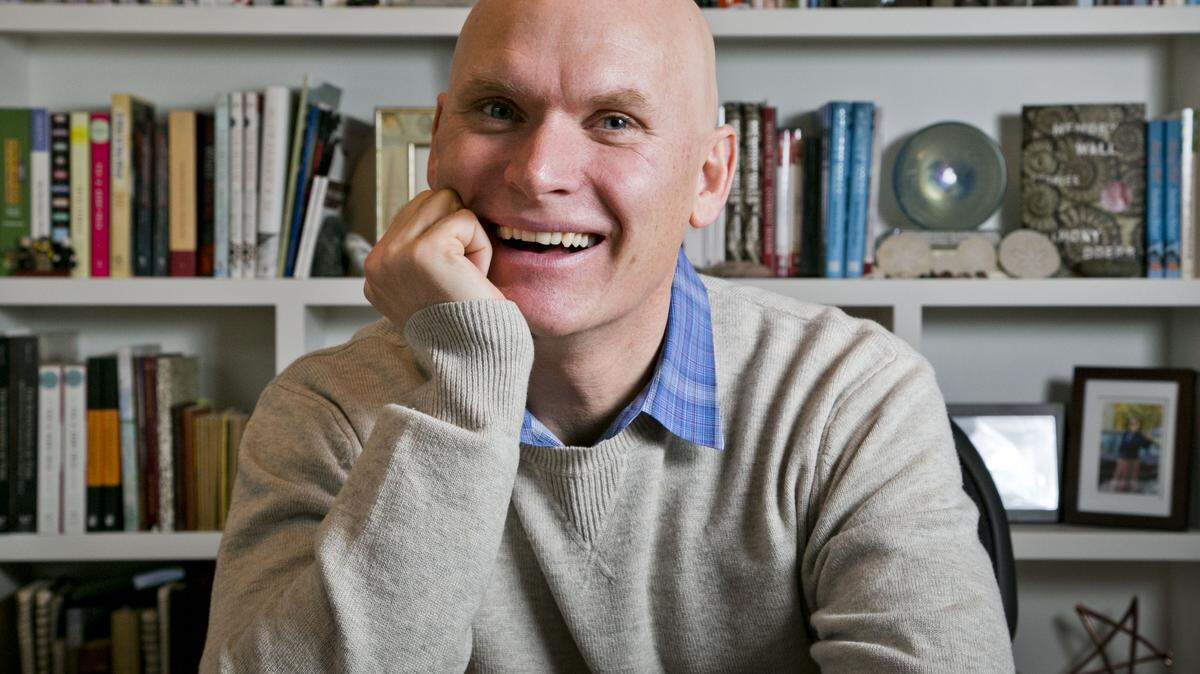
Boise writer Tony Doerr’s life changed in 2014 in ways that have yet to be seen. It happened with the unexpected popular success of his book, “All the Light We Cannot See,” which he launched at a benefit for The Cabin last May.
Doerr’s earlier books and short stories regularly received critical praise and garnered coveted awards, including several O’Henry and Pushcart prizes, The Rome Prize, The Story Prize and the London Times Story Prize. But none achieved the kind of runaway, widespread readership of “All the Light,” his second novel.
He crafted it over 10 years of meticulous research and writing. It became the best-selling fiction novel, with its combined hardcover and digital sales, for 2014, and continues in the top 10 on book sales lists across the country.
“I don’t know why,” he continues to say through it all, and it’s a puzzle he’s happy not to solve now that he’s off the book-tour trail and back home in Boise’s Highlands neighborhood.
Doerr moved to Boise with his wife, Shauna, who grew up here, in 2003. They have twin boys who are now 10. Life in town hasn’t changed much since the book came out, he says. He writes each day in his Downtown office, enjoys hiking and mountain biking in the Foothills, and hangs out with his family and friends.
Though he has yet to see a royalty check, the idea that he might be able to afford to focus on work for a while is highly appealing, he says. “I’ll definitely have more options and can relax a bit,” he says.
Doerr started work on “All the Light We Cannot See” in 2004, the year that his first novel “About Grace” came out and the twins were born. He whittled away at it over the years, carefully crafting his story about a young German boy and blind French girl growing up on opposite sides during World War II. Both are desperate to survive and struggle to do what’s “right” in their worlds. Doerr’s work quietly speaks to basic humanity during times of war, something that obviously resonates with his readers today.
His bite-sized chapters flash between their two storylines, making his rich and often baroque descriptions and dense prose about the natural sciences and radio very approachable.
The real heart of the book is in his two touching main characters. Marie-Laure is blind yet “sees” the world through her experience very clearly. Werner is a brilliant radio technician who is lifted out of harsh poverty by the Third Reich and then is destroyed by it - eventually lost in darkness. Their stories intersect in a poignant time in world history as the walled French city of Saint-Malo lay under siege by American forces in 1944.
The novel earned Doerr a spot as a finalist for the National Book Award for fiction. Though he didn’t win - the award went to Phil Klay’s “Redeployment” - Doerr’s sales ballooned in the following weeks. Then in early December, President Obama bought Doerr’s book and created another surge in sales. More than a million copies of the book have been sold. Recently, Costco put in a large order, and the book is in its 29th printing
It’s been quite a ride so far. What one word would you use to describe it?
Overwhelming!
What was it like being at the National Book Award festivities?
It was spectacular and fun and nerve-wracking all at once. The ceremony was held at Cipriani Wall Street, which is a gigantic and gorgeous ballroom with 70-foot ceilings and a Wedgewood dome, and everyone was supremely dressed up, and there were a lot of flashbulbs - well, a lot for the book world. The fiction award was the very last event of the evening, so I had a long time to worry that I was sweating through my tux. The best part was seeing my beautiful wife in a fancy gown.
Whose autograph did you get (or wish you had gotten)?
At the tables next to ours were Marilynne Robinson, Ursula K. Le Guin, Roz Chast and Louise Glück - all legends. Neil Gaiman was there, looking like he’d just come from dinner at Hogwarts; I probably should have gotten his autograph for my sons.
Have the logistics of your Boise life changed with the book’s success?
Not much. I still get tea at Dawson Taylor, mail stuff at the post office and wander around Albertsons trying to find vanilla extract.
What do the boys think about all the attention you’re getting?
Let’s ask them! Henry says, “It kinda sucks when you’re gone all the time.” Owen adds, “Yeah, I don’t like when you’re gone a lot.”
Has the book’s success changed your perception of your work?
Thankfully, once I’m at my desk, and my email is turned off, things like reviews and social media tend to fall away, and I just go back to work like I always have.
Does the book’s success make you calm or make you nervous?
Both. I’m thrilled to have found more readers; every writer wants an audience. But at the same time, I don’t like disappointing people, and taking risks with my future work means I’m bound to disappoint some folks. In the end you just have to stay true to your own interests and hope some readers are generous enough to come along for the ride.
What’s the next project and do you think you’ll spend 10 years on it?
I’m playing with three different ideas right now. And, nope, I don’t think my agent will be thrilled if I take 10 more years to complete one of them.
You’ve traveled to so many exotic places to write. Where is the next place you’d like to visit?
Istanbul. I’m pretty sure a future project will be set there, so I’m headed there this spring.
Have you gotten any interest from Hollywood about a movie deal?
Yep, 20th Century Fox bought the option on the same day the novel came out. (The option recently moved to Fox Searchlight.) If they ever start filming, I’d love to go see it. Hopefully, they’re respectful to the material but by the time this happens I’m usually done with it and ready to move on.
Are there other stories of yours being made into films?
Yes, a Japanese filmmaker, Yoshifumi Tsubota, is making a film of “The Shell Collector,” and an Irish film company optioned a story I wrote, “Procreate, Generate,” about a couple trying to have a baby.
You’re so funny and your books are so serious. Have you ever thought of writing something funny?
I get that a lot. I like to write essays that are funny, and I like giving talks and people are expecting this bald serious guy. It’s fun to play with that perception. I can’t say it’s a conscious choice. My work is more reverent. I try to lighten things occasionally. Or at least have lighter complications that modulate the levels of despair. It might be fun to write a comedy some day, but I have so much respect for that genre. I know how difficult it is.
What’s on your playlist?
Beethoven. Yo La Tengo. And Curtis Stigers. (Are you reading this, Curtis?)
Who or what inspires you?
Reading, being outdoors and my wife.
What are you reading?
Orhan Pamuk’s “My Name is Red” (Vintage Reprints).
What’s your motto?
Be kind to people.
What three films would you most like to watch on a trans-continental flight?
“The Godfather,” “The Royal Tenenbaums” and “Her.”
What’s your guilty pleasure?
Homemade gigantic chocolate chip cookies.
What’s your favorite place to take out-of-town guests?
McCall.
In all of history, with whom would you most like to dine?
Maybe the Buhl Woman, a young Paleo-Indian woman who lived and died near Buhl about 11,000 years ago. I’d love to see how much she knew about what plants to eat in our yard, if she brought any weapons, what she’d wear. Would she have shoes? Would she freak out if I gave her a Dorito?
What advice helped you the most in your life, and who gave it to you?
Hustle. My dad gave me this advice approximately 25,000 times when I was a kid: before, during and after every sports game. Now, of course, I find myself saying the same thing to my kids. What’s the old proverb? Diligence is the mother of good luck.
Dana Oland is a former professional dancer and member of Actors Equity who writes about performing and visual arts for the Idaho Statesman. She also writes about food, wine, pets, jazz and other aspects of the good life in Boise.
This story was originally published February 21, 2015 at 12:00 AM.