Local expert suggests accommodations, effective strategies to support and live with ADHD
.jpeg "The view from Boise Depot shows Capitol Boulevard, downtown Boise and the state Capitol.")
While most people are aware of ADHD, know someone who has it, or may have it themselves, they might not know how to accommodate the different neurotypes. According to Meridian Advanced Psychiatry, ADHD affects millions of children and adults worldwide, and at least 5% of Americans according to Webmd.
Since October was ADHD awareness month, we took some time to ask an expert for advice.
Attention Deficit Hyperactive Disorder (ADHD) is described as a neurodevelopmental disability that affects a person’s attention regulation, impulse control and overall executive functions, according to the National Institute of Mental Health.
For people with ADHD, living in a neurotypical world means living in a society that was not designed with neurodivergent people like them in mind. So, accommodations are necessary to help them succeed when almost everything in the environment works against their brain.
The Statesman talked with Kyanne Wright, a psychiatrist with Meridian Advanced Psychiatry for help making a list of some of the best accommodation advice. Meridian Advanced Psychiatry offers mental health services including diagnosis tests and treatment plans. We also consulted the book “How to ADHD” by Jessica McCabe for insight.
Here are a few accommodations and strategies people with ADHD and those who support them can implement in their lives as adults or children, at school, the workplace or at home.
Taking breaks & regulating attention
Wright said that for people with ADHD, maintaining focus takes a certain level of self-awareness to eliminate distractions and determine what gives a person energy to focus.
She said she has found with some of her patients with ADHD that taking brief, planned brakes to indulge in a stimulating distraction can help keep a person focused.
“If I know my phone is going to distract me where I’m at work, maybe turning the sound off during an assignment and having it away from me is helpful,” Wright said. “Maybe I plan that I spend 30 minutes doing this assignment, and then I take five minutes to check my phone, and that’s all I give myself.”
Fidget tools & releasing the hyperactivity
It has been found that sitting still with quiet hands might help a neurotypical person focus, but for those with ADHD the opposite is true. Most people with ADHD have found that movement or utilizing a fidget tool can help them direct their focus.
When it comes to fidget tools, our minds may jump to the fidget spinner craze of 2017 - a time when young people would play with the small, three-pronged spinning toy doing tricks on their fingers and distracting others. For this, fidget tools get a bad reputation, and some schools or workplaces may ban them, according to Business Insider.
However, a good fidget tool is hand-sized, discreet, pattern-based and stimulating enough to the user so it can release any anxiety or hyperactivity.
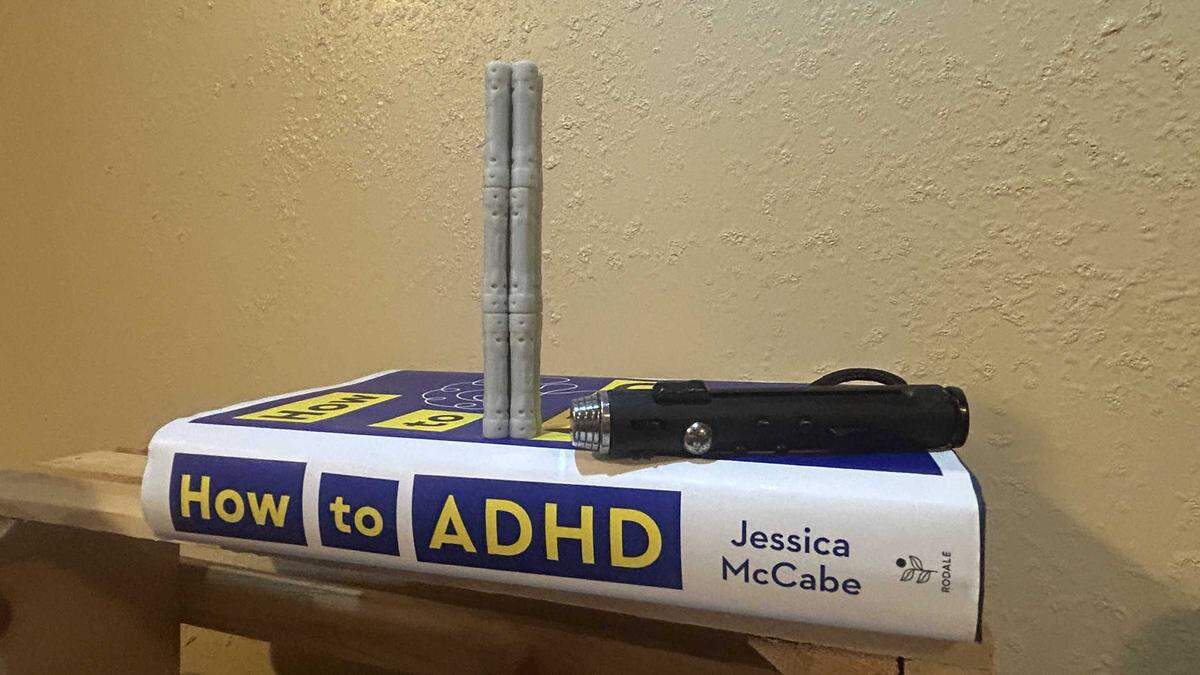
“Hand fidgets can help at work. You would have something small, that’s not going to be too much of a distraction for other people like hand pop-its,” Wright said. “If the person’s sensory need is more texture based, maybe something soft or squishy to kind of help keep their focus.”
Wright also suggests physical exercise. If a person is mostly sitting at their job, then taking a break to walk to the bathroom or grab some water may help their focus.
“I even had one person do 20 jumping jacks just to get some of that energy out, and then they come back to their task,” she said.
McCabe also writes in her book “How to ADHD” that exploring alternative seating can satisfy the need to fidget and exercise.
“Special seating, such as yoga balls, rocking or swivel chairs, or stationary bike chairs can provide additional stimulation to help focus your brain,” McCabe writes.
Visual reminders & alarms
People with ADHD may also find that when they start a project, it is difficult to finish or they will start a new project without finishing the one they just started. Since regulating attention can be a struggle, Wright recommends using visual guides to stay on track.
“Having a visual plan of your day and be more mindful about the things that you have to do during the day or for the rest of the week. If you have an assignment due on Friday and are worried you may procrastinate and wait like the very last minute, break it up again into smaller increments and do a little each day,” Wright said. “Use sticky notes alarms on your phone to remind you to stay on track with your plan. Using a calendar and having a whiteboard on the wall, helping to remind you.”
In her book, McCabe suggests that people with ADHD “leave a trail of breadcrumbs” back to their assignment.
“ADHD brains are more sensitive to environmental cues than neurotypical brains,” McCabe writes. She suggested keeping reminders of what a person is supposed to be doing in their line of sight - and removing reminders of distractions.
While school and the workplace may offer accommodations, some people with ADHD may not know what to ask for or what strategy will be the most helpful to them. Wright and McCabe both encourage people with ADHD to learn more about how ADHD affects them and reminds others that a strategy that works for one person, may not work for everyone.
“Environments that account for neurodiversity are more equitable for those who have it,” McCabe writes.
Meridian Advanced Psychiatry offers diagnosis testing, treatment plans and therapy for those with ADHD, and encourages others to contact them for an individualized plan. Idaho Neuropsychology also offers treatment plans and diagnosis testing on their website.