As population grows, Idaho hospitals struggle -- and health care providers get creative
TWIN FALLS — More than a year ago, North Canyon Medical Center contemplated the future of its Gooding hospital and how to extend its reach.
Since it received funding through a taxing district, the medical center was limited to providing services in Gooding County. But in a county with fewer than 16,000 residents, “it’s difficult to have traction to be a viable enterprise,” said Chief Executive Officer Tim Powers.
In May, Gooding County residents voted overwhelmingly — with 87 percent support — to dissolve North Canyon’s hospital taxing district and allow it to become a nonprofit. The hospital had already cut tax revenue out of its operating budget in July 2017.
The change means North Canyon — an 18-bed critical access hospital that’s independent and locally-controlled by a board of directors — can now expand outside its primary service area.
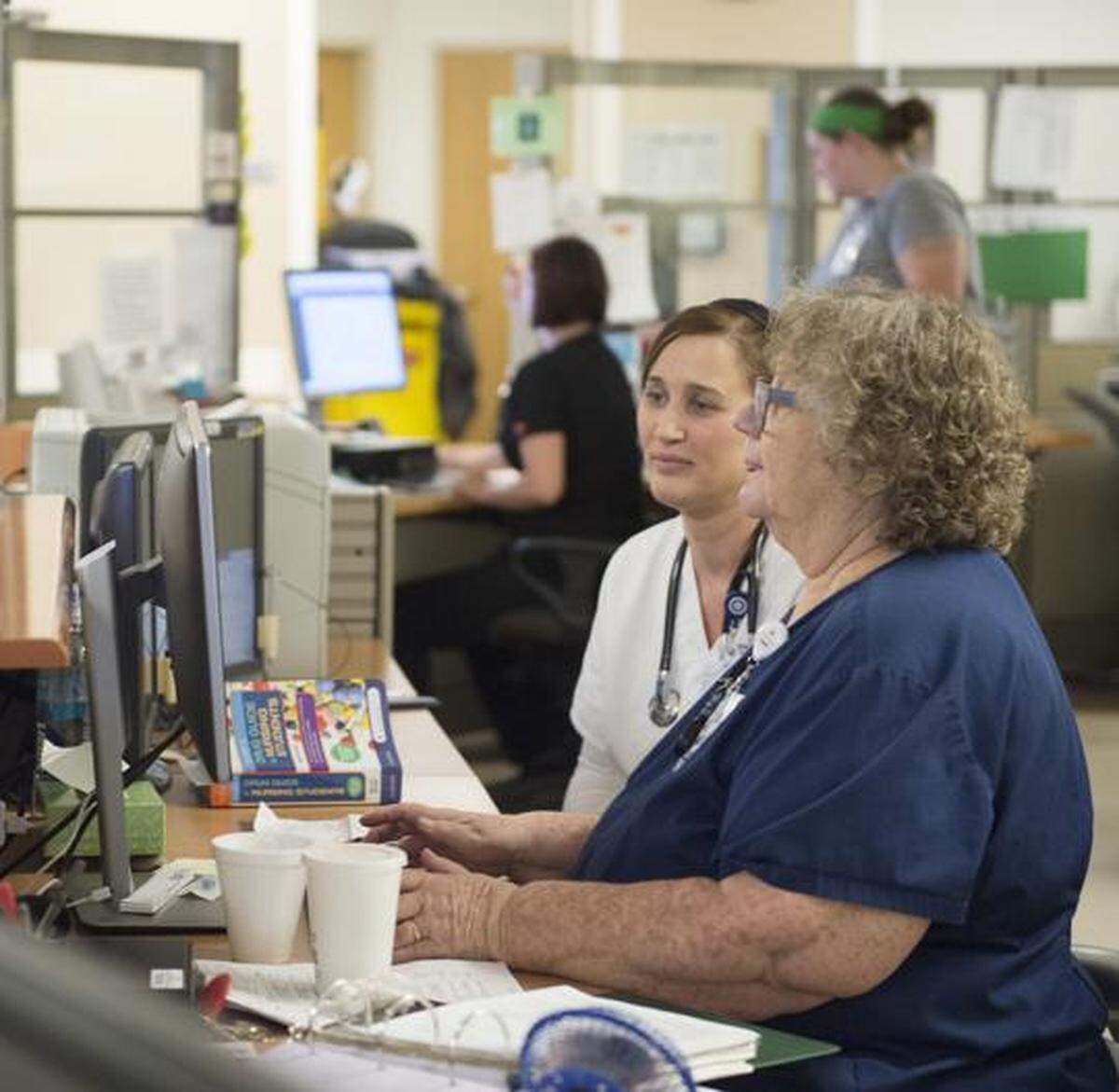
St. Luke’s Magic Valley is a medical hub for a population of between 200,000 and 250,000 people. A lot of those people are from rural communities and drive into Twin Falls to receive medical care, said Debbie Kytle, a St. Luke’s east region administrator overseeing physician services and population health.
With overall patient numbers, “we’re experiencing very significant growth,” said Mike Fenello, the hospital’s site administrator. As the population continues to grow, St. Luke’s will continue to seek creative ways to connect patients with care, he said, such as through telehealth — a way of delivering patient care remotely by using a live video system.
To keep up with the Magic Valley’s population growth, “we have to start transforming health care,” Kytle said, including addressing fragmentation in care. St. Luke’s wants to provide proactive health care, she said, instead of reactive health care that just provides fixes when a patient is sick.
Another big consideration for hospitals and patients alike is the price tag.
“We know the cost of health care is unsustainable,” Fenello said.
The only way to truly change that is to keep people healthy and intervene faster. That, he said, would help St. Luke’s Magic Valley focus on a small population — 5 percent of patients — that account for 50 percent of total health care costs.
‘The demand is growing’
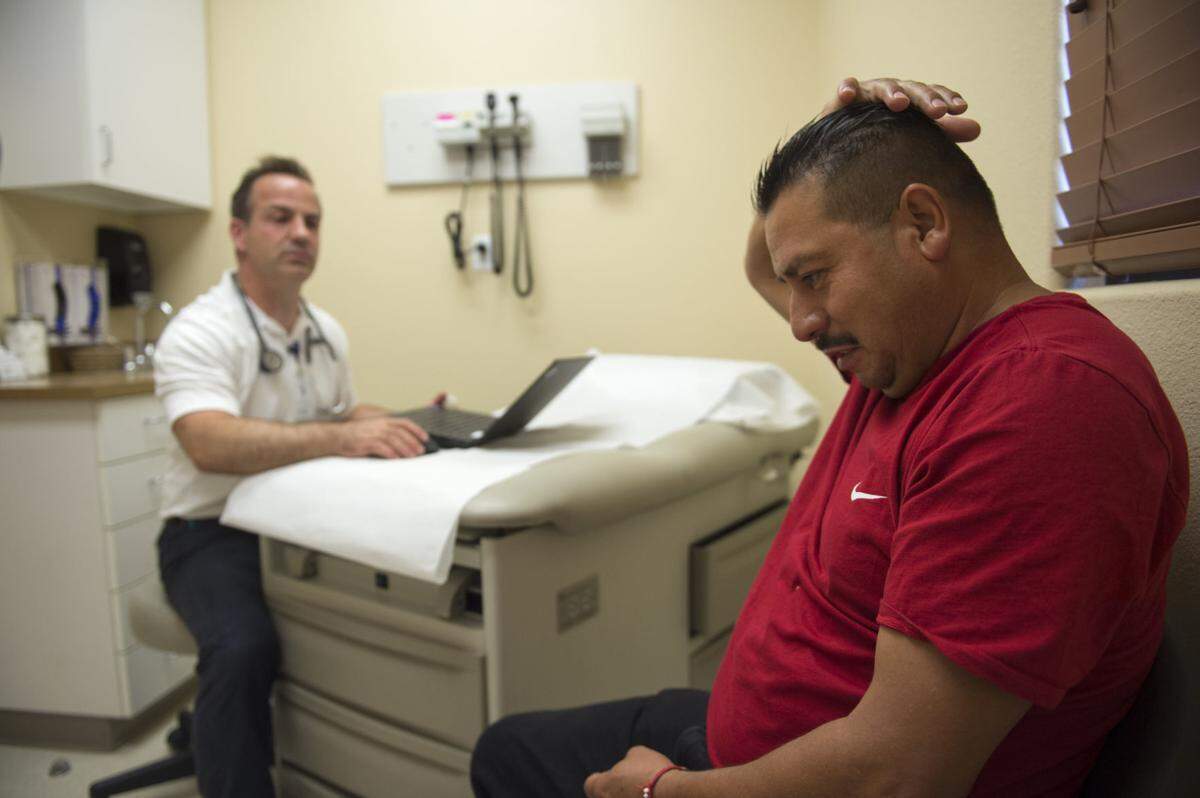
It’s a common trend among Magic Valley health care providers: They’re seeing more patients and figuring out how to meet their needs, including cost-effective care for those who have a high-deductible health insurance plan or no insurance.
For Family Health Services — with locations in Buhl, Fairfield, Jerome, Twin Falls, Kimberly, Burley and Rupert — new patients are still accepted at all clinics, but some individual providers have full caseloads and aren’t accepting new patients.
FHS provides medical, dental and behavioral health care on a sliding fee scale that’s dependent on income, and they also provide affordable prescription drug coverage. About 41 percent of patients don’t have health insurance, Medicare or Medicaid.
“That number does seem to be rising,” said Aaron Houston, chief executive officer for Family Health Services.
More people have jobs that don’t offer health insurance, he said, noting costs are rising and it’s difficult for companies — especially small ones — to cover them. That’s despite a low unemployment rate, 2.5 percent in June, for the south-central Idaho region.
Nationwide, 88 percent of full-time workers have access to health insurance benefits, according to the U.S. Department of Labor’s Bureau of Labor Statistics. But for part-time civilian workers, that number is just 21 percent. The Idaho Department of Labor used to compile a fringe benefit survey but doesn’t anymore due to a loss of grant funding.
There’s also a trend toward a “gig economy,” where workers fill temporary jobs in areas like housekeeping and ride-sharing. Almost 25 percent of Americans fill these types of positions, according to the Pew Research Center. While some workers say they enjoy the flexibility, the downside is no employer-provided health insurance.
Approximately 64 percent of FHS’ patients are below 200 percent of the federal poverty level, meaning they’re eligible to receive discounts on primary care health services. And 11.2 percent are best served in a language other than English.
For low-income residents, another option for health care is Wellness Tree Community Clinic, a nonprofit in Twin Falls that provides medical and dental care for those living at or below the poverty level or who don’t have health insurance.
Low-income Shoshone-area residents who don’t have health insurance can access the Good Samaritan Clinic, operating out of Shoshone Family Medical Center.
At FHS, Houston has also noticed a recent increase in the number of patients who have high-deductible health insurance plans. With that kind of plan, it’s tough for a parent to take their child to a doctor, he said, if they’re paying more than $100 out of pocket for an office visit, testing and medications.
The same is true at Cassia Regional Hospital, where administrator Ben Smalley said he’s seen an influx of patients who have high-deductible plans and are seeking cost-effective care.
The 25-bed critical access hospital in Burley has seen overall growth in patient numbers and the number of surgeries performed. Most patients are from Mini-Cassia, although some come from Twin Falls and the surrounding areas.
“I think we’re seeing that as the population grows, the demand is growing as well,” Smalley said.
At nearby Minidoka Memorial Hospital in Rupert, “we’re definitely growing,” said chief executive officer Tom Murphy.
Within the past year, the hospital has added a couple more primary care providers. It also saw 300 more in-patient days —visits where a patient is admitted to the hospital — than the previous year. “That’s quite an increase for us,” Murphy said.
At North Canyon Medical Center, patients often hail from as far away as northern Nevada, Mini-Cassia and Glenns Ferry. But Powers said the number of emergency room visits are fairly flat, if not dipping a little. One possible explanation is a walk-in clinic opened one-and-a-half years ago, so people may be going there for minor issues instead of the ER.
Hiring and expanding
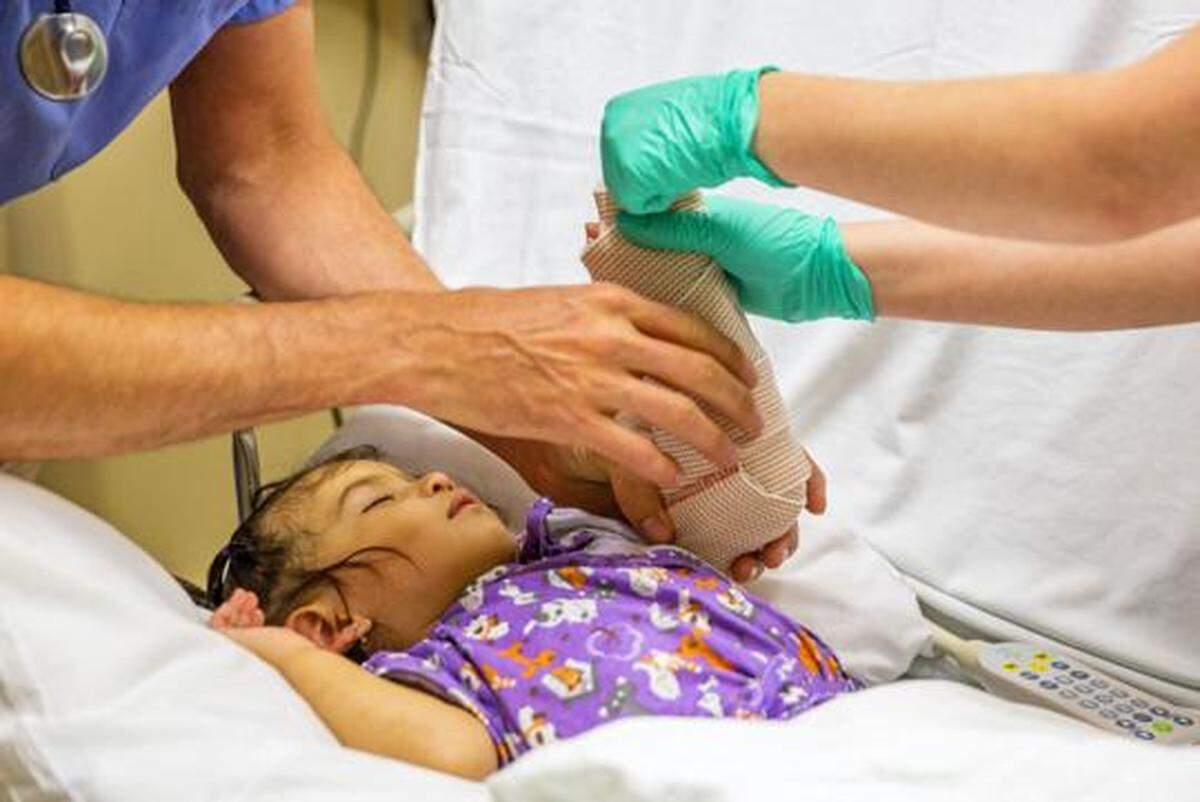
Magic Valley hospitals are pushing to recruit more medical staff. But to fill the gaps and provide more specialized care, many small hospitals are turning to telehealth services or establishing partnerships with larger health care organizations. And they’re using technology to help patients more easily communicate with providers and schedule appointments.
In 2006, 84 percent of Twin Falls County voters approved selling the county-owned Magic Valley Regional Medical Center to the St. Luke’s Health System. Since then, St. Luke’s has hired 152 physicians and 77 advanced-level providers, such as nurse practitioners and physician assistants.
When providers come to visit the Magic Valley, they tend to like the area’s culture, Kytle said. “Of course, having a new hospital has been huge to recruitment.”
Many of the physicians hired have a connection to the region, and they like that Twin Falls is a small but vibrant area with a strong hospital system, Fenello said.
There is a nationwide physician shortage, and Idaho and the Magic Valley are no exception.
In south-central Idaho, Fenello said, there’s an acute shortage of physiatrists and adolescent psychiatrists. Addressing mental health needs is “an enormous issue for every hospital and community across the country.”
St. Luke’s is working to integrate licensed clinical social workers into its primary care clinics, Fenello said, and several are working there already. The Twin Falls hospital has also integrated social workers into the emergency department.
Family Medicine Residency of Idaho has a Magic Valley rural training track to bring residents to Twin Falls and Jerome. St. Luke’s also takes in a lot of students in areas like nursing and pharmacy.
Since 2016, Cassia Regional Hospital has hired seven physicians, including in primary care. In August, it plans to add a general surgeon. It will also add providers in podiatry and internal medicine.
For years, the hospital hovered around 27-28 physicians on its medical staff, which includes those employed by the hospital and with affiliated organizations. It’s now up to 31 physicians.
The hospital reaches out to medical students to encourage them to rotate through, and it invests in tuition reimbursement — more than $30,000 so far in 2018 — to help its employees pursue more education and advance to higher-level positions.
To expand available services for patients, Cassia Regional Hospital — which is part of Intermountain Healthcare — uses a high-definition camera system to connect with specialists in other Intermountain hospitals.
For example, local patients may receive chemotherapy at Cassia Regional Hospital so they don’t have to drive to another city and can stay close to their family. Patients can have face-to-face interaction with an oncologist via video system.
Telehealth services are also used for intensive care. And the emergency department can connect with a neurologist who can assess patients for stroke symptoms. Specialists are available through Intermountain Healthcare’s virtual hospital.
At North Canyon Medical Center, the hospital began a relationship with Mayo Clinic Health Solutions about three years ago. Previously, the hospital had a relationship with St. Luke’s, but Powers said it was an “amicable split.” North Canyon also offers tele-behavioral health in partnership with the University of Utah.
For patients, it means having more specialized physicians who can review their case. And there’s the opportunity for referrals to travel to Mayo Clinic hospitals for testing and treatment.
North Canyon also brings in about a dozen rotating specialists and is hiring more of its own providers.
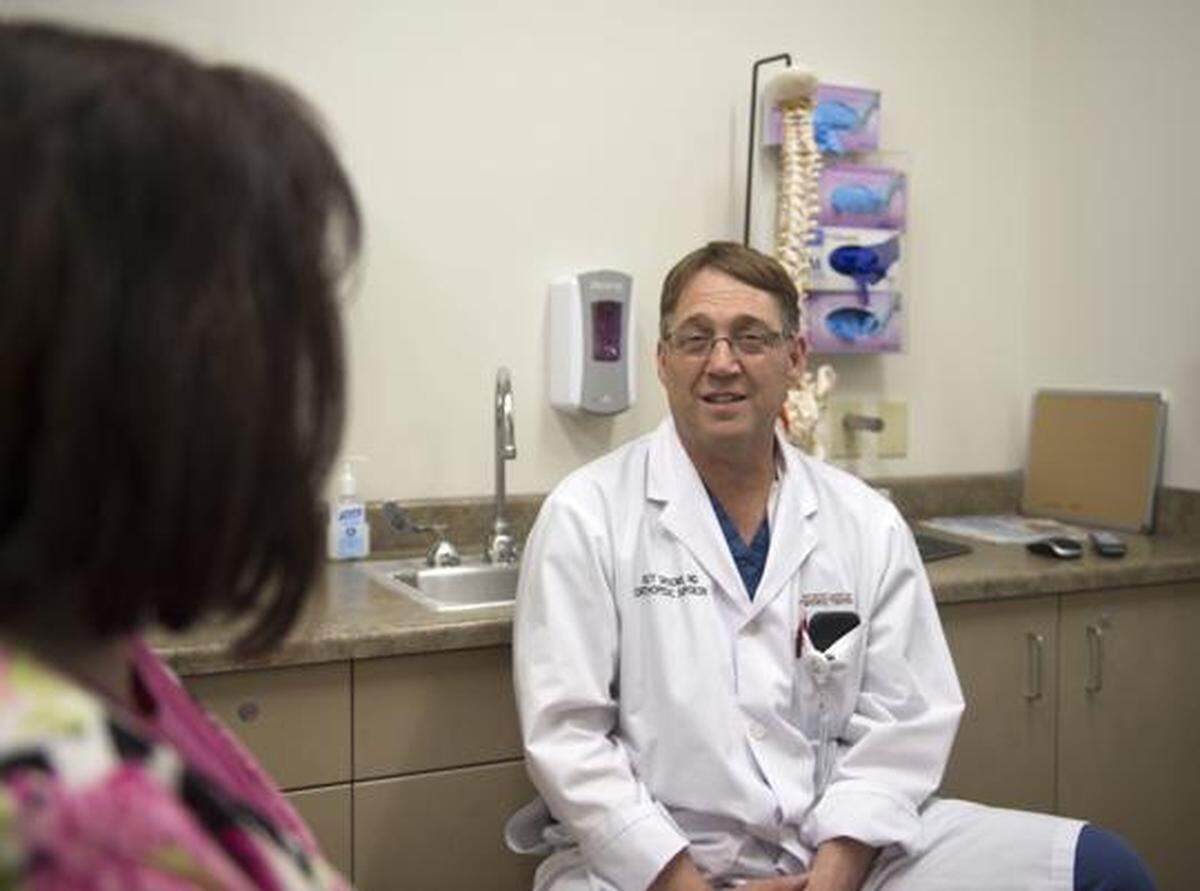
Starting in April 2017, North Canyon brought in an orthopedic surgeon one week per month. Several months ago, the physician from Oklahoma agreed to practice in Gooding full-time. He started on staff June 1. The hospital also added a general surgeon about 18 months ago.
Minidoka Memorial Hospital has visiting specialists from St. Luke’s Magic Valley, but doesn’t have affiliation agreements with other health care organizations, Murphy said. “We’re pretty independent.”
The hospital is fully owned by Minidoka County and is governed by a seven-member board appointed by county commissioners. But the hospital’s operations and revenues are separate from the county.
Minidoka Memorial isn’t looking to sell to any other health system, Murphy said. It may look to collaborate with larger health systems, though, to provide telehealth services in areas where it’s not feasible to provide local services, he said, such as burn, stroke and intensive care.
“We’re excited about telehealth to afford us opportunities to access specialty care,” Murphy said. It would allow for treating patients locally instead of having to transfer them to other hospitals.
For Family Health Services, being able to expand services would require funding through grants and donations from foundations or individuals. Expanding Medicaid coverage in Idaho, Houston said, would be a big help.
Patients in what’s commonly referred to as the “Medicaid gap,” receive subsidized health care services from FHS and some are only paying $20 for a doctor’s visit. With Medicaid, Family Health Services would receive a much higher level of reimbursement.
“We’d be able to offer a lot more services,” Houston said.
Even without Medicaid expansion, FHS has hired several new providers recently, including a new physician who started in mid-July in Burley and one who starts this month in Rupert. In January, a new physician started in Jerome.
“We don’t hire physicians very often,” Houston said. “They’re very hard to come by.”
For instance, FHS spent about five years recruiting for a Burley physician. The only providers who come have ties to the community, he said, adding they can make more money elsewhere.
Still, FHS has doubled the number of providers in its behavioral health program over the past 18 months. At the beginning of 2017, FHS had four counselors and a psychologist in Twin Falls, and one counselor in Burley. Now, it has a total of seven counselors in Twin Falls, Jerome and Burley, one psychologist in Twin Falls and three integrated counselors in Twin Falls, Jerome and Burley.
New facilities
To offset recent population growth, some Magic Valley hospitals are looking to build new facilities. But they want to focus more on outlying areas rather than Twin Falls, where St. Luke’s Magic Valley’s often has available beds.
“Our five-year plan is looking to put services more away from our campus,” Fenello said.
There’s still the possibility of building more facilities at the Twin Falls hospital campus, he said. But the hospital’s first priority is starting small primary care clinics, which will likely include rotating specialists. Despite the hospital’s stated focus on areas outside of Twin Falls, Kimberly and south Twin Falls are two areas where Fenello said a new clinic would make sense, as the populations there grow rapidly.
St. Luke’s is building an expanded clinic in Buhl, which will accommodate more patients and services. It’s tentatively set to open in early 2019.
St. Luke’s also recently built new facilities on its Twin Falls hospital campus. An outpatient surgery center opened in November 2016 and a new medical office building — Medical Plaza 2 — opened to patients this March.
Family Health Services plans to build a new clinic in Jerome, which will double its dental capacity. Right now, it’s hard to get new patients in, Houston said, even though the dental clinic is open 10 hours a day, five days a week.
The current facility in Jerome is only about six years old, Houston said, but FHS has already outgrown the space.
Finding land along the South Lincoln Avenue corridor has been a challenge, though. FHS is on its fifth bid and is now looking at other areas of Jerome as possibilities. Officials hope to purchase land within the next month, then it will take about a year to build a new facility.
In Burley, Cassia Regional Hospital sits on a 30-acre campus, where it has been since 1995. “We’re just ready for this growth whenever it comes because we have plenty of land for that growth to take place,” Smalley said.
The hospital recently expanded its emergency room and imaging facilities. And it remodeled much of its building space, purchasing new boiler and air systems.
Assisted living
Hospitals and traditional health care providers aren’t the only facilities feeling the effects of growth. Assisted living centers — providers of services such as nursing and rehabilitation — are also stretched thin.
Bridgeview Estates in Twin Falls is 75 percent full, although occupancy rates vary depending on whether it’s independent living, assisted living (which is traditionally more full) or skilled care.
Bridgeview’s resident numbers have increased within the last year, executive director Joanne Johnson said, as more people come to the facility from the Wood River Valley.
Bridgeview opened in 1992 and doubled its number of rooms in 1996 during the second phase of construction. “They planned for the growth, and that’s why we’re so big,” Johnson said.
In addition to the elderly, Bridgeview cares for young people who have conditions that require long-term care. People can also live at Bridgeview while undergoing physical rehabilitation before returning home.
Bridgeview is a continuum-of-care facility, which means residents can move among the different levels over time as their needs change. It’s one of the only centers in the Magic Valley that provides that option, Bridgeview executive director Cindy Riedel said.
Bridgeview offers speech, occupational and physical therapy on site, and employs its own providers.
The facility provides medical care, but is also a fun place to live, Johnson said, offering activities such as a luau in August. “We also provide that social part of your life that’s so important.”

What are other hospitals are doing?
A major need for Eastern Idaho Regional Medical Center in Idaho Falls — along with most hospitals in Idaho and across the western United States — is physician recruitment.
“A bit of a double whammy, of course, is population growth coupled with an aging physician population,” said hospital spokeswoman Coleen Niemann.
Eastern Idaho Regional Medical Center — a 334-bed hospital — primarily serves Bonneville County, which includes Idaho Falls. But it’s also the primary trauma facility near Yellowstone National Park, and sees patients from areas of nearby Wyoming and Montana.
There’s already a physician shortage with today’s current population in southeast Idaho, Niemann said. “When you factor in growing communities and retirements within the next five years or so of specialists in Idaho Falls and the surrounding communities, the shortage is even greater.”
Physicians who have roots in Idaho or are drawn to the lifestyle and recreational activities are the two types of providers most likely to move to Idaho Falls, she said.
The hospital spends a significant amount of time and resources working to recruit physicians, Niemann said. A new strategy for EIRMC has been establishing a residency program.
“We already know that residents have a higher probability of practicing in the community in which they did their training,” she said.
The hospital’s first group of 10 internal medicine physicians started in July on a three-year residency. The hospital will add 10 more residents each year. It also intends to start other specialty residency programs, Niemann said.
In Corvallis, Ore. — a city only slightly larger than Twin Falls — Samaritan Health Services hasn’t necessarily seen an increase in the number of hospital stays, despite population growth, spokeswoman Julie Manning said.
That’s because five years ago — using a waiver from the federal government — Oregon established regional Coordinated Care Organizations, she said. They focus on caring for Medicaid patient needs earlier on, reducing the number of emergency room visits and hospital stays.
The regional health system — based in Corvallis — serves three Oregon counties and includes five hospitals, three of which are critical access with fewer than 25 beds. The health system is building new hospitals in Newport and Lincoln City to replace aging structures.
The health system’s service area includes about 275,000 residents — only slightly larger than the St. Luke’s Magic Valley service area. But Corvallis is home to Oregon State University, so its demographic makeup is much different than Twin Falls.
“Corvallis is a little bit of an enigma, in the sense that (of) 56,000 people, half of the population are OSU students who live in the city limits,” Manning said.
Despite the disproportionate number of college-aged students in Corvallis, however, the city has seen the fourth-largest increase in Oregon for the number of residents ages 65 and older since 2010 — a surprising figure, Manning said.
The main driver of patient numbers has been Medicaid expansion, Manning said. The biggest uptick was in 2015 as more people came onto the Oregon Health Plan.
Medicaid expansion is a major topic of discussion here in Idaho. An expansion proposal has received enough signatures to get a spot on November ballots, and it was recently backed by Rep. Fred Wood, a Republican from Burley and chair of the House and Welfare Committee. If the ballot initiative passes, it could mean coverage for about 62,000 low-income Idahoans.
Back in Oregon, the state has faced a lot of challenges with getting Medicaid enrollment infrastructure up and running, Manning said, and accurately tracking who’s eligible or ineligible for the Oregon Health Plan.
With Medicaid expansion, Samaritan Health System has seen more low-income community members beginning to access services in a primary care settling instead of through a hospital emergency department, Manning said.
“We’ve definitely seen that has been the case,” she said. “Folks are having their preventative care. They’re accessing services in a more typical way. That has helped us contain costs.”
The real focus for the health system is population health, Manning said. It’s about helping people try to stay healthy and manage chronic conditions — such as diabetes, high blood pressure and congestive heart failure — that can greatly impact their health and quality of life.
“We’re working more closely than ever with community-based organizations,” she said.
With more people accessing primary care, “it means we really need to ramp up ways people can receive primary care,” Manning said, such as quick care, online appointments and walk-ins.
Eastern Idaho and Corvallis are just a few examples of communities of a similar size to Twin Falls. Like Twin Falls, they’re exploring new ways to treat patients, including putting a larger emphasis on reaching people in clinics earlier to help to reduce the number of emergency room visits and hospitalizations further down the road.
“We are really trying to broaden the front door to our system,” Manning said.