
Idaho’s Gary Stevens goes from jockey to actor in the blockbuster film ‘Seabiscuit’
This story originally published on July 17, 2003.
Gary Stevens knows all about the perfect ride. As one of the world’s top jockeys he has ridden on the backs of countless champions, won more than 4,700 races and more than $200 million in purses.
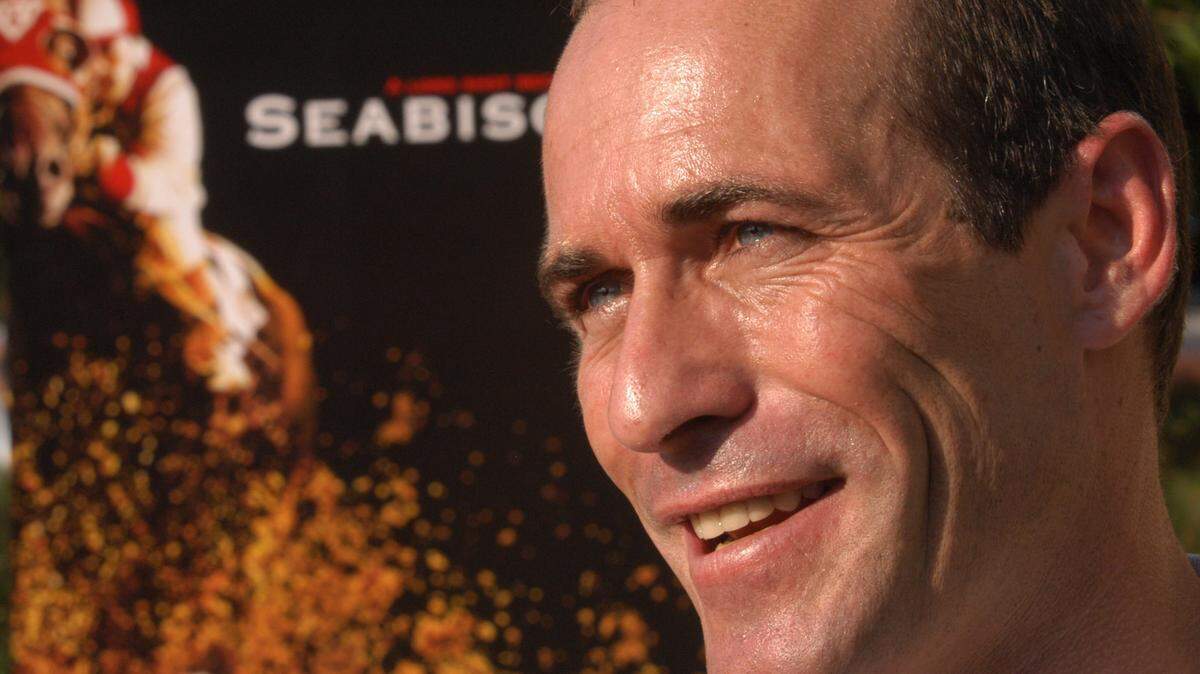
Now the Idaho native has found the perfect role as the jockey turns actor for the the epic film “Seabiscuit,” one of the most anticipated movies of the year.
The film is slated to open nationally on Friday, July 25, but you can see it in Boise this Saturday at an advance screening to benefit Boise Contemporary Theater. You can also attend a post-screening reception and party at the Boise Art Museum with Stevens and Frank Marshall, one of the film’s producers.
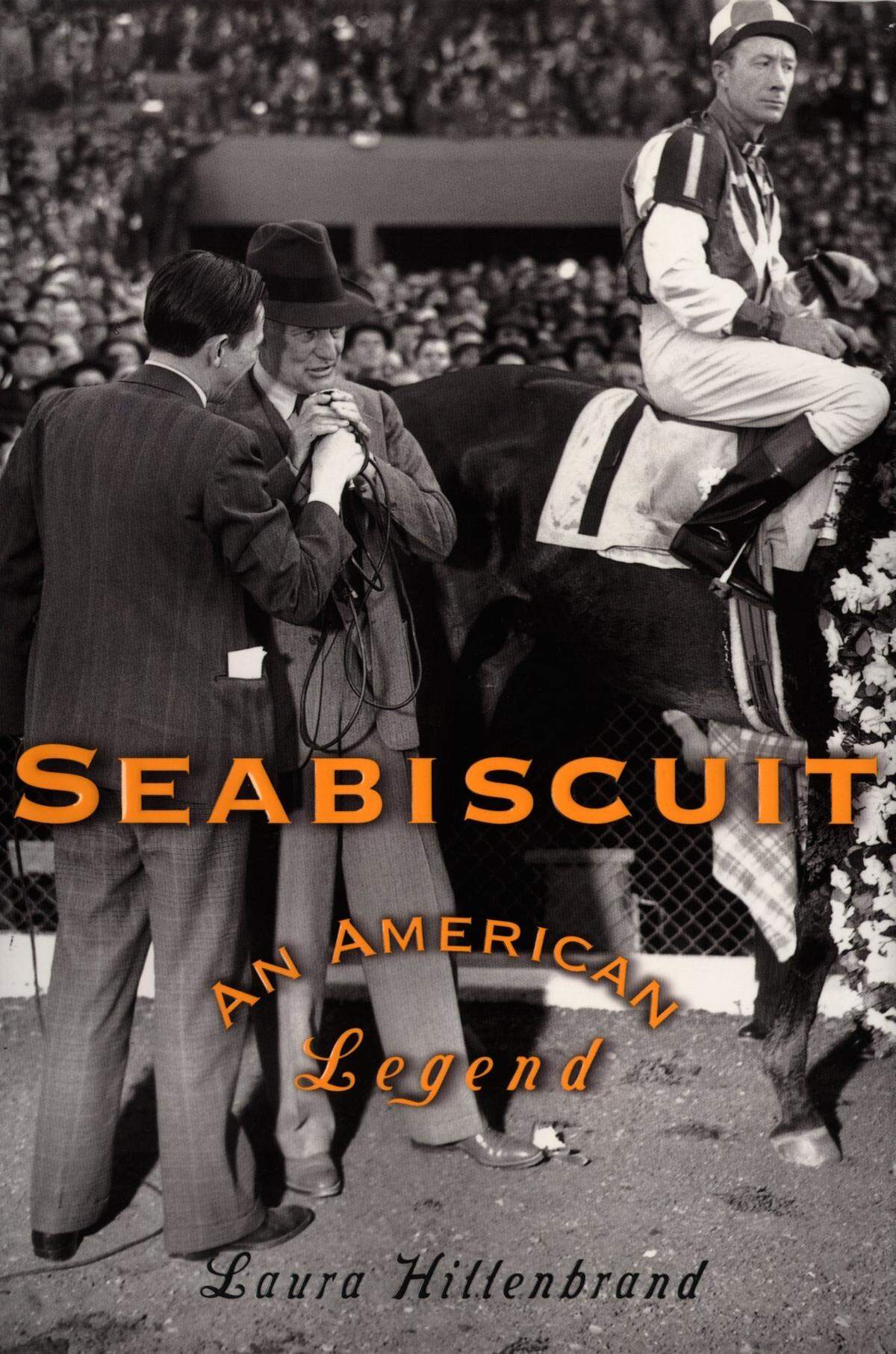
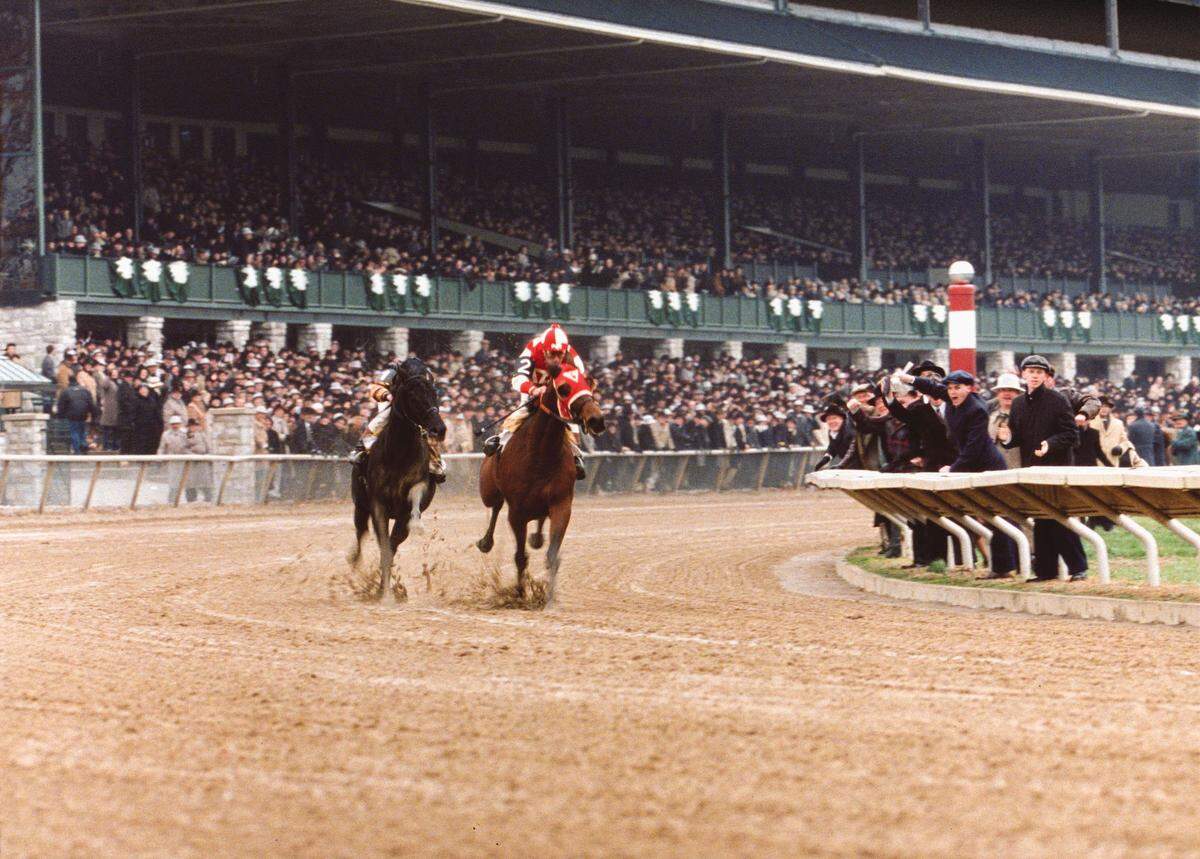
The film, based on the bestselling book by Laura Hillenbrand, tells the story of three misfits -- jockey Johnny “Red” Pollard (Tobey Maguire), trainer Tom Smith (Chris Cooper), owner Charles Howard (Jeff Bridges).
They were brought together by Seabiscuit, a tough little horse that captured the hearts of a nation as he ran through one of the most dramatic careers in horse racing.
‘Iceman’ cometh
Last summer, Stevens temporarily traded his racing silks for the character of George Woolf, a legendary jockey from another era.
Woolf is considered one of the greatest jockeys to sit in a saddle.
He rode Seabiscuit after Red Pollard, the horse’s jockey, sustained near-fatal injuries in a fall from another horse.
Stevens fit as easily into Woolf’s white cowboy hat as he did into the personality that spurred Woolf’s nickname, “Iceman.”
“He had ice water running through his veins. He thrived on riding big races. It’s ironic that he’s the guy I get to play,” Stevens said over his cell phone while waiting for a flight in a New Jersey airport. “I’ve been a fan of his since I was in my teens.”
That was when he was learning the jockeying ropes at Les Bois Park, attending Capital High School and cruising downtown Boise on Friday nights.
Stevens grew up in Boise in the house his parents, Ron and Barbara, still own. Stevens used to hang out as a kid with his father, a horse trainer at Les Bois Park.
Les Bois racetrack manager Duayne Didericksen remembers meeting Stevens when the rider was galloping horses at 14, too young to get a jockey’s license.
From there, he made his mark in the West and went on to become a three-time winner of the Kentucky Derby, multiple winner of the Belmont Stakes and an inductee to the National Museum of Racing and Hall of Fame in 1997.
“He’s the best there is,” Didericksen said. “I’m serious when I say that. He’s got natural ability and a great horse sense. If you’re on a horse next to him, he can tell what your horse is going to do better than you can.”
If he’s a natural horseman, he’s also a natural actor, said Frank Marshall, who produced the film with his wife, Kathleen Kennedy, and producer Jane Sindell. Marshall and Kennedy produced the film series “Indiana Jones” and “Back to the Future.” Marshall produced “The Bourne Identity,” which he brought to Boise last September .
Marshall’s connection to Boise is through high school friends who still live here. He invested in the Piper Pub, which is sponsoring this event. This is the 11th film he has premiered in Boise.
Right place, right time
Stevens won the role through a bit of good old-fashioned Hollywood serendipity. Only instead of Schwab’s Drugstore, the setting was the jocks’ room at the Santa Anita Park racetrack.
Marshall and the film’s director, screenwriter and co-producer Gary Ross (“Big,” “Dave,” “Pleasantville”) went to Santa Anita for research and happened into the room. Then in walked handsome, 5-foot 3-inch Stevens.
“Inside that inner sanctum my Gary (Ross) saw Gary (Stevens) and said, ‘That guy could play George Woolf.’ “
They talked to him that day, but Stevens turned them down flat.
“I hadn’t read the script. I didn’t know what they wanted. I make a pretty good living doing what I do, riding racehorses. My comment to Gary Ross was, ‘Look, you don’t have enough money and I don’t have enough time,’ and I walked away.”
The filmmakers were determined. Marshall called Steven’s agent. Then he, Ross and Kennedy flew to Louisville the next month for the Kentucky Derby and to take Stevens to dinner.
This time they were successful. Stevens agreed to do the project. They watched him ride the next day, but so far no one had seen him act.
They arranged for Stevens to work with acting coach Larry Moss for a week before reading for the casting director. Moss sent him home after a day. A week later, Stevens walked out of his audition with a signed contract.
“He’s amazing,” Marshall said. “He holds his own in his scenes with Chris Cooper and Jeff Bridges. He can focus in on what’s happening, and he didn’t get nervous. But then he’s not intimidated by much.”
The natural approach
For Stevens, tackling Woolf’s character was easy, not like acting at all, he said.
“I’ve always felt a kindred spirit to George. I knew pretty much everything about George’s private life before there was even a Seabiscuit book written,” he said.
Woolf had a signature style. He liked to party hard, ride fast and look good.
Stevens has celebrated birthdays and major events in his life in Woolf’s old apartment above the Derby restaurant in Arcadia, Calif. Woolf used to own the place, and it’s said his ghost haunts it.
Stevens and Woolf have a few similarities beyond the fact that they both thrive on big races.
Woolf struggled with diabetes throughout his life. The disease eventually killed him when he slipped into a coma and fell on a red Santa Anita track during a race. Stevens has overcome his own health issues. He was diagnosed with Perthes hip disease, which causes pain and mobility problems, as a child. He’s also had several knee injuries that have sidelined him throughout his career.
And Stevens has his special horse, like Woolf’s Seabiscuit. Stevens and Silver Charm won the Kentucky Derby and Preakness in 1997. They were denied the Triple Crown by Touch Gold at the Belmont Stakes.
“He (Silver Charm) was a big overachiever. He wasn’t supposed to be as good as he was, and he winds up being second or third on the overall money-winning list with over $7 million in winnings,” Stevens said. “He gave me some of my biggest thrills in horse racing.”
Stevens rarely visits Boise these days because of his schedule, he said.
He will fly in on a chartered jet for Saturday’s screening, then leave almost immediately after. He’s slated to ride in the Sunset Handicap at the Hollywood Park on Sunday, July 20.
That’s how most of his racing career goes now.
“I’m a little like a hired gun. I fly in the day before. I walk out and sit on that horse for the first time. Then I’ve got about 11 minutes to get to know that horse before the starting gate.”
Though Stevens travels in a jet instead of riding the rails like Woolf and Pollard did, not much about a jockey’s life has changed.
It’s still an incredibly hard one. They run their bodies down and abuse them trying to stay light enough to ride. Few gain the respect in the horse racing world that Stevens enjoys, he said.
“Things have not changed a whole lot between 1938 and 2003. It’s still that way, and that is going to be portrayed in the film. The weights are exactly what they were and the human body ... Well, we’re growing them bigger now. It’s not an easy task for anyone.”
Still, it’s an addicting job and lifestyle that Stevens has found difficult to leave behind. He retired in 1999 but came back.
“It’s like any athlete ... I don’t know if you become addicted to the race riding or to the atmosphere,” he said. “It’s what I’ve lived since I was 16 years old, and 37 was way too early to play golf everyday.”
Possibly he does now. If this film is successful he could have an acting career ahead of him.
Either way, this experience will always be with him, he said.
“I feel like there’s a little bit of George riding around with me now.”