
There are lunkers lurking. Here’s how to make sure you’re ready when the big one bites
When I was about 10 years old, I learned a valuable fishing lesson. I was with my Uncle Mike, and after a slow day of fishing, the bluegill bite picked up at dusk. We gleefully sat on the bank, reeling in fish after fish on tiny pieces of nightcrawler.
I distinctly remember my uncle tying a less-than-stellar knot and wondering aloud whether he should redo it.
“Nah,” he said. “It will be fine catching these little guys.”
A while later, there was a ruckus as something huge crashed the bluegill party. Naturally, the big fish took Mike’s bait and, of course, snapped the line.
I put that incident in my memory bank and have adhered to a simple rule ever since: Treat every fish as if it’s a big one.
When I teach my fishing classes or fish with newcomers, I preach the same lesson. Many people take it to heart. Some have to have their hearts broken once before it takes hold.
We Idahoans live among some truly awesome fisheries. Almost anywhere you fish, there are lunkers lurking. A streak of pan-sized rainbows on the Boise River could be broken by a 2-foot brown trout. An afternoon of bass fishing on the Snake River could be interrupted by a giant sturgeon. And just when you think there are nothing but small brookies in that mountain stream, a monster bull trout might surprise you. The only question is whether you’ll be ready.
Over the years, I have found catfish to be the most common surprise giants. It makes sense — they are predators and they live in similar habitats as more frequently targeted species.
One night at Swan Falls, my buddy Caleb and I were catching smallmouth bass on nearly every cast but struggling to hook anything more than a foot long. Then, in water that looked barely a foot deep, I set the hook on something solid. I thought I might be hung up on the bottom until it started to move. Fifteen minutes later, we hauled a 30-inch channel catfish ashore. It was so big, Caleb could only get its front half in the net before hefting it up on the bank.
Last week, Caleb and I hit another stretch of the Snake. Again, the bass bite was steady. We weren’t catching big ones, but I made sure my knot was true as I tied on an orange crankbait. On my third cast, my rod doubled over with violent force and something big began peeling drag.
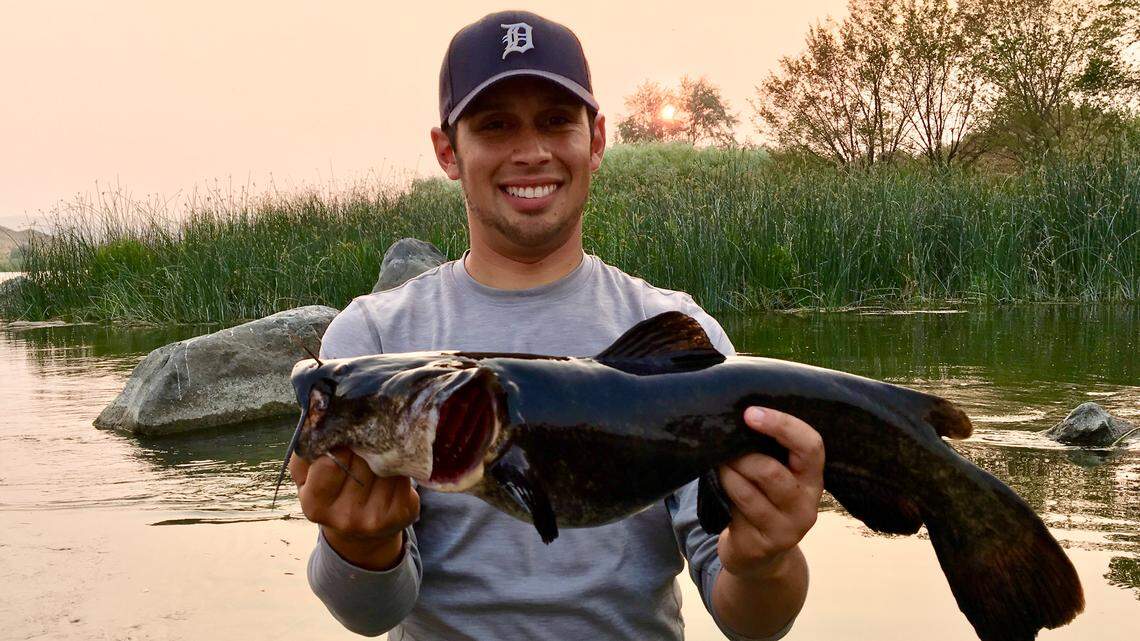
This fish felt different, though. Whereas channel cats have a distinct, heavy head thumping motion, this fish was running all over the place, changing direction with surprising frequency. For a moment, I thought it might be a monster smallmouth. But there was nothing small about the jaws on this beast. It was a 2-foot flathead catfish, caught further upstream than I’d ever seen a flatty before.
As I’ve written many times before, one of the best things about fishing is you never know what might happen on any given trip. So take care of your gear and tie those knots tight. When an unexpected monster smashes your panfish jig, you’ll be glad you did.
Tight lines!
This story was originally published August 13, 2018 at 11:31 AM.