Here’s what monkeypox is and how to spot it after first probable case reported in Idaho
The first probable case of the monkeypox virus was reported in Idaho on Wednesday, becoming at least the 560th case in the United States since the outbreak began earlier this year, if confirmed by the Centers for Disease Control and Prevention.
The Idaho Department of Health and Welfare and Central District Health announced the case and said that the patient lives in central Idaho and is at home recovering.
Although the CDC is yet to confirm the case, testing for initial virus identification was performed at the Idaho Bureau of Laboratories. The Department of Health and Welfare said that it is working with state and local health officials to identify and notify anyone who came into potential contact with the patient.
Although the disease is usually found in Africa, over 6,000 cases have been reported outside the continent in 2022. No one in the United States is yet to die from monkeypox, but with the disease now in Idaho, here’s what the virus is and how to look out for it:
What is monkeypox?
Monkeypox was discovered in 1958 within colonies of monkeys kept for research and was first found in humans in 1970. Until the 2022 outbreak, nearly all disease cases were found in central and western African countries, according to the CDC. Any instances outside the continent could usually be traced back to Africa through travel or imported animals.
The CDC is still unclear how the 2022 outbreak began, but early data from the World Health Organization shows that many cases involve gay and bisexual men.
However, the CDC recommends that regardless of sexual orientation, anyone who has been in close contact with someone with monkeypox is at risk.
Symptoms of monkeypox, who is at risk?
Along with the groups stated above, Idaho state epidemiologist Christine Hahn previously told the Idaho Statesman that while most Idahoans are not at high risk, she is worried about those with a damaged or suppressed immune system and pregnant women.
Monkeypox typically results in a mild illness, according to the DHW. Although most people recover independently, antivirals from the federal government are available for those who exhibit more severe symptoms.
Symptoms of monkeypox include fever-like symptoms, such as headache and muscle aches, chills, exhaustion and swollen lymph nodes, according to the CDC. But the tell-tale sign is a rash that starts as small red spots that eventually become firm and circular and can become pus-filled, according to the DHW.
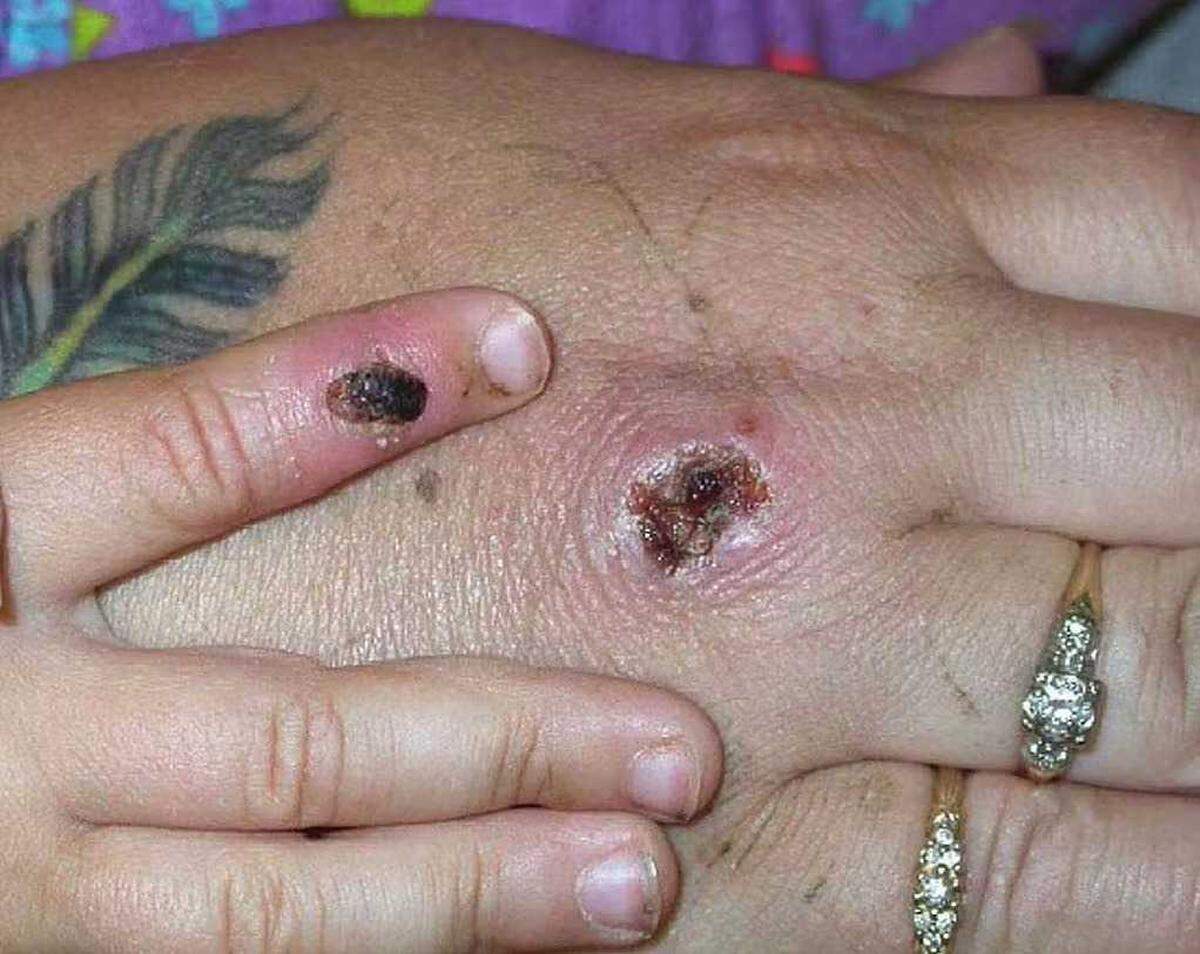
Monkeypox can spread from person to person through these infectious sores and scabs, and water droplets after prolonged face-to-face contact.
“We are reminding people to look out for new spots, ulcers, or blisters on any part of their body,” Hahn said on Wednesday in a press release.
“If anyone suspects they might have monkeypox,” Hahn continued, “particularly if they have recently had a new sexual partner, they should limit their contact with others and contact their healthcare provider as soon as possible — although please phone ahead before going in person.”
How to prevent monkeypox infection
Along with having contact with someone with the virus, those at higher risk include people who have traveled to a country outside the U.S. with confirmed cases of monkeypox or have had contact with a dead or live animal found in Africa or use products derived from such animals.
The DHW provides a list of ways to help prevent the spread of monkeypox:
Wash your hands anytime you’ve come into contact with possibly infected people or animals or materials such as bedding that has touched lesions.
Limit contact with anyone who has developed a new rash.
If you have a new rash, stay home aside from attending medical appointments.
Isolate from household members and pets if you develop a rash.
Wear protective equipment such as gloves if caring for someone with monkeypox.
Although no animals in the U.S. are known to have been infected with monkeypox during the 2022 outbreak, avoid animals or animal products from central or west Africa.
This story was originally published July 6, 2022 at 4:04 PM.