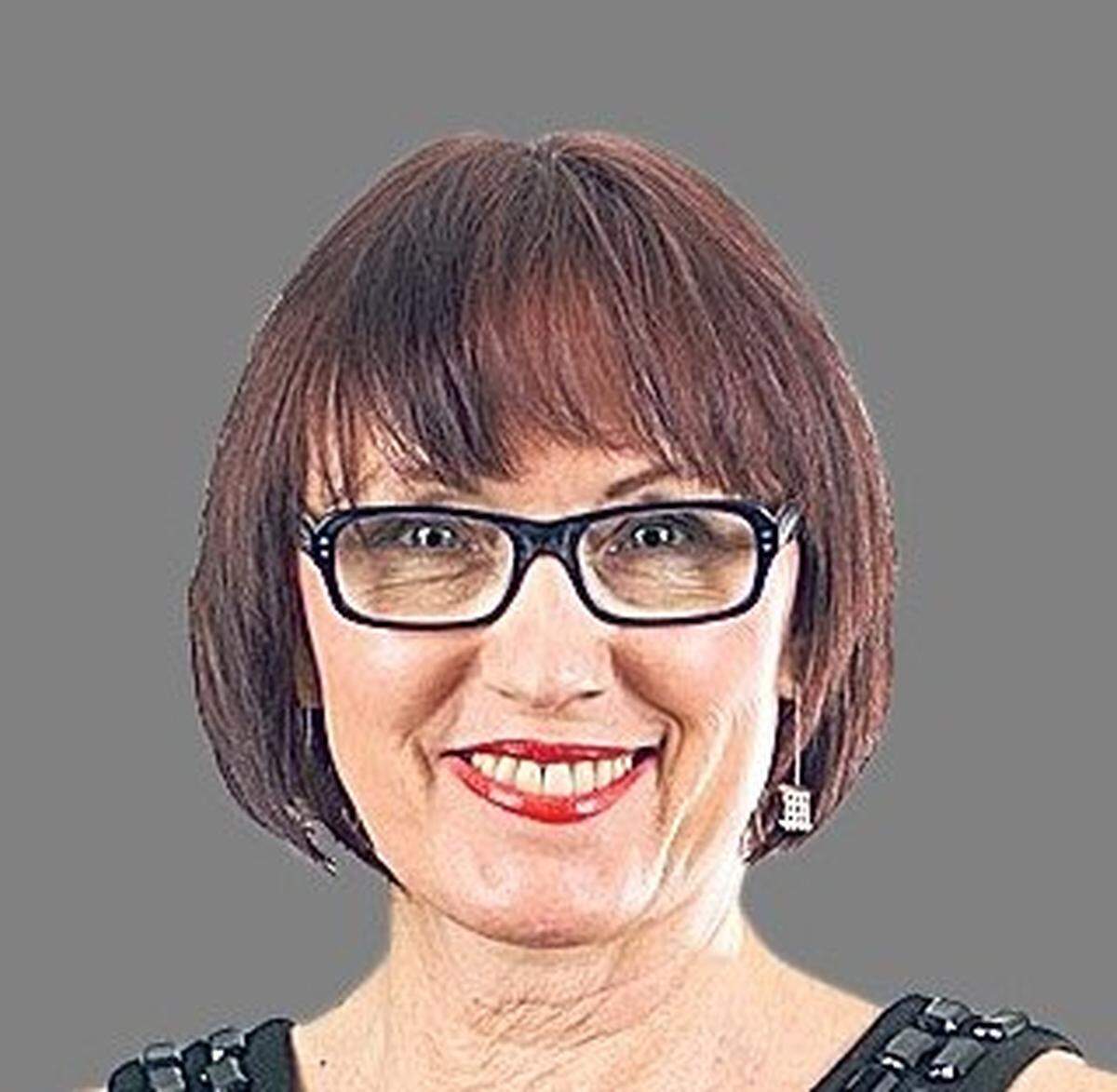
Obituary: Idaho benefactress, businesswoman Velma V. Morrison dies at 92
This story was originally published in 2013.
Velma V. Morrison suffered a heart attack and then later died Thursday in Rancho Mirage, Calif., said her daughter, Judyth Roberts.
Morrison had a home there where she spent an increasing amount of time in recent years.
“My mother was an amazing woman. She had a great life, and we were lucky enough to have her around for 92 years,” said Roberts from Morrison’s home in California. The family is gathered there for a private memorial later this week.
Many of Morrison’s accomplishments are engraved in the city’s architecture — from the Velma V. Morrison Center for the Performing Arts on Boise State University’s campus to the Velma Morrison Interpretive Center at the Peregrine Fund World Center for Birds of Prey.
Morrison was an original, an enigmatic mix of American practicality, homey sweetness and tough business acumen.
She was known as frank and outspoken. She rarely held back, said Robert Franz, musical director of the Boise Philharmonic, one of the organizations she supported.
“She was full of piss and vinegar,” he says. “She didn’t have a filter, and I just adored that about her. You always knew right where you stood.”
Those qualities along with a bright smile and twinkling eye, helped her captivate one of the wealthiest and most influential men of his day, Harry W. Morrison, co—founder of the engineering firm Morrison Knudsen Co.
Velma met Harry Morrison at the restaurant she owned, called The Broiler, in Bakersfield, Calif., where Harry and a group of friends ate while on a trip to support Boise Junior College football.
He was a widower. His first wife, Ann Daly Morrison, had died of leukemia in 1957. Velma Shannon was twice divorced with three children, a single mom running a successful business.
Instantly impressed and charmed by her, he pursued her over the next year sending her bushels of flowers and tickets to the theater with limousine rides.
Because she had a background in nursing, he persuaded her to work for him as a private nurse to help manage his diabetes. She took the job and then married him in 1959. She was 38; he was 74.
“He said, ‘You might think of marrying a younger man, but I promise you one thing, you will never be bored.’ And he was right. That’s the story,” Velma said of Harry in 2009.
With Harry, Velma traveled the world, met heads of state and began building a life in Boise for herself and her children
At first, it was difficult, said Kitty Fleischman, who wrote Velma Morrison’s biography, “The Bluebird Will Sing Tomorrow,” which came out in 2003.
“The old guard of the day really didn’t like her, because Ann was so beloved,” Fleischman said. “When Ann died, Harry felt that his life was over. Then he met Velma, and he realized there was more to live for.”
That was one reason Velma and Esther Simplot became close friends. Both second, younger wives, they understood one another, Fleischman said.
Velma’s vivacious energy-infused Harry’s later years and the lives of those around her, Roberts said.
“It was hard to keep up with her. Even in the last few years, she rarely had a free moment,” Roberts said. “She lived life to the fullest.”
In her life, Morrison knew both great joy and sorrow. One of her saddest moments came in 1968 when her youngest son, Gary Shannon, died in a snowmobile accident at age 17.
“It really broke her heart,” Roberts said.
When Fleischman interviewed Morrison about Gary’s death, she told Fleischman to ask anything she wanted at that moment because they would never speak of it again.
“She never even read that chapter,” Fleischman said.
Born in 1920, Velma Mitchell grew up on her family’s ranch in Tipton, Calif. She lived through the tough times and never forgot her humble roots or lost her down—to—earth quality.
“I’m just a California farm girl, a child of the Depression,” she told the Statesman.
She harvested grain during the Depression, welded ships during World War II and as a young nursing student traveled to Nome, Alaska, to inoculate Eskimos against tuberculosis.
She loved the arts, and while she was married to Morrison and later through the Harry W. Morrison Foundation, which she ran for many years, she supported nearly every major arts group in Boise.
She also was a shrewd businesswoman who won the respect of power brokers and scholars alike. Morrison received honorary doctorates from the College of Idaho and Gonzaga, Pepperdine and Boise State universities. The awards are framed and proudly displayed in her home.
Morrison spearheaded the Morrison Center project in the early 1980s. Harry Morrison had originally wanted to build the performing arts venue in Ann Morrison Park — which he created as a tribute to his first wife — but couldn’t find the community support for that part of the project.
After his death, the idea seemed to fade until Velma Morrison revived it with the help of her friend Fred Norman, who became its first executive director.
It was a huge community effort, Fleischman said, but it was Morrison who really had the energy to complete it. She brokered a compromise to put it on BSU’s campus and in turn create a building in which the university’s theater and music departments could expand.
While putting up funds of her own, she led the community campaign that raised $16 million for the project. The center opened in 1984.
Morrison enjoyed many performances from her personal box, including national touring musicals and a night of Gershwin — her favorite composer — that she produced for Boise Philharmonic as her 90th birthday celebration.
“She wanted to celebrate her birthday with the community,” Franz said. “That night she came backstage and she was beaming from ear to ear.”
In 1986, she married her longtime friend John Hockberger. The couple continued her philanthropic work together for the foundation to benefit organizations in Idaho, said Justin Wilkerson, Morrison’s grandson who now runs the foundation. Hockberger died in 2008.
Over her years in Idaho, Velma supported political candidates she believed in.
“I couldn’t tell you if she was a Republican or Democrat,” Roberts said. “She was somewhere in the middle, but she knew when she wanted to support someone.”
Having her host a party at her Boise home — dubbed Camelot — on Crescent Rim was a quiet endorsement that carried more weight than even she realized.
The family is asking for privacy and patience over the next few weeks, Roberts said. A public celebration of Morrison’s life in Boise will happen in the future and details are forthcoming.
“Mom just wanted to have a big party,” she said.
In lieu of flowers, the family is asking for donations to the Morrison Foundation.
Morrison is survived by children, Judyth and Ron; three grandchildren, Michael Trindade, Drake Shannon and Justin Wilkerson; and four great-grandchildren.
Velma Morrison timeline:
1920: Velma Mitchell is born on a ranch in Tipton, Calif.
1933: Velma’s father takes her to see the building of the Boulder Dam project on the Colorado River. (It would later be named the Hoover Dam.) She never would have imagined that 25 years later, she would meet and marry one of its chief architects.
1935: Harry Morrison completes construction on the Boulder Dam.
1937: Velma marries Roland Gatewood.
1939: Gives birth to Judyth and shortly after divorces Gatewood.
1941: Attends nursing school and spends the summer in Nome, Alaska.
1942-45: During World War II she works in the shipyards in Richmond, Calif., as a first—aid nurse. She then learns to weld and becomes a journeyman boilermaker, working on the high decks.
1943: Marries Ron Shannon, whom she met working in the shipyards. They start a grain harvesting company.
1946: Velma gives birth to a son Ron Shannon.
1948: Velma, her parents and their spouses, her sister, Melva, and her husband, Ron, and their two kids travel the west and south, harvesting grain across Texas, the Midwest and Idaho.
1950: Gary Shannon is born.
1951: Ron Shannon and Velma separate.
1952: Velma and Melva buy and run the Home Town Cafe in Tulare, Calif.
c. 1956: Velma opens The Broiler in Bakersfield, Calif.
1957: Ann Morrison dies. Harry begins work on Ann Morrison Park.
1958: Velma meets Harry W. Morrison, she goes to work for him.
1959: Velma and Harry marry on July 1; she moves to Boise with her two boys.
1968: Gary and his friend Rick Crabb die in a snowmobiling accident.
1971: Harry Morrison dies at 86.
1980: Velma starts the movement to build the Morrison Center for the Performing Arts.
1984: Morrison Center opens with a production of “My Fair Lady.”
1986: Velma marries a fourth time, to John Hockberger.
1990: Morrison Kundsen Co. begins its decline; MK Nature Center opens.
1996: Morrison Kundsen declares bankruptcy, is bought by Washington Group.
2000: Velma celebrates her 80th birthday.
2003: Velma publishes her memoir, “The Bluebird Will Sing Tomorrow.”
2008: John Hockberger dies.
2009: Morrison Center celebrates 25 years and renames the center the Velma V. Morrison Center.
2013 Velma Morrison dies at her home in Rancho Mirage, California.
Provided by Kitty Fleischman
WHO WAS HARRY W. MORRISON?
Harry Morrison and Morris Knudsen co-founded the engineering firm Morrison Knudsen Co. in Boise in 1912.
The two met in 1905 while working on the construction of the New York irrigation canal in southwestern Idaho. Morrison was a 20—year—old concrete superintendent for the Reclamation Service; Knudsen was a Nebraska farmer in his 40s with a team of horses and a field scraper.
Starting with $600, some tools and horses, Morrison led MK to become one of the world’s largest construction companies, working on projects that included large—scale dams in the West and air bases in Vietnam.
Harry Morrison was a larger—than—life figure who was credited with saving Idaho First National Bank during the Depression.
Morrison could literally move mountains. He helped build the Hoover, Parker and Grand Coulee dams and orchestrated other engineering marvels around the world.
In 1954, Time Magazine dubbed Morrison “the man who has done more than anyone else to change the face of the earth” in a cover story.
He died in 1971.
ABOUT THE MORRISON FOUNDATIONS
The Harry W. Morrison Foundation was created in 1952 with a focus on social and humanitarian causes, working mostly in rural Idaho.
The foundation built a fire station in Lowman and bought medical equipment for a hospital in Minidoka.
In 1984, the Harry W. Morrison Foundation put up the seed money for the Morrison Center Endowment Foundation, with a $2.5 million matching grant; the community raised the rest of the $5 million that started the endowment. That endowment is at around $12 million today (2013).
The two entities work separately, said Justin Wilkerson, who today is president of both boards. The only link is that the Harry W. Morrison Foundation board appoints the endowment board.
Wilkerson joined the endowment board around 2000, and became the president of both boards in 2010 when his grandmother Velma stepped down.
Over time he changed how the endowment funds local arts groups. It now is putting up about $600,000 (about 5 percent of its assets) in grant money annually to give local arts groups a way to access the Morrison Center. “I think it’s a win for everyone,” Wilkerson said.