Undeveloped land is selling in rural Idaho. Why Valley County wants more oversight
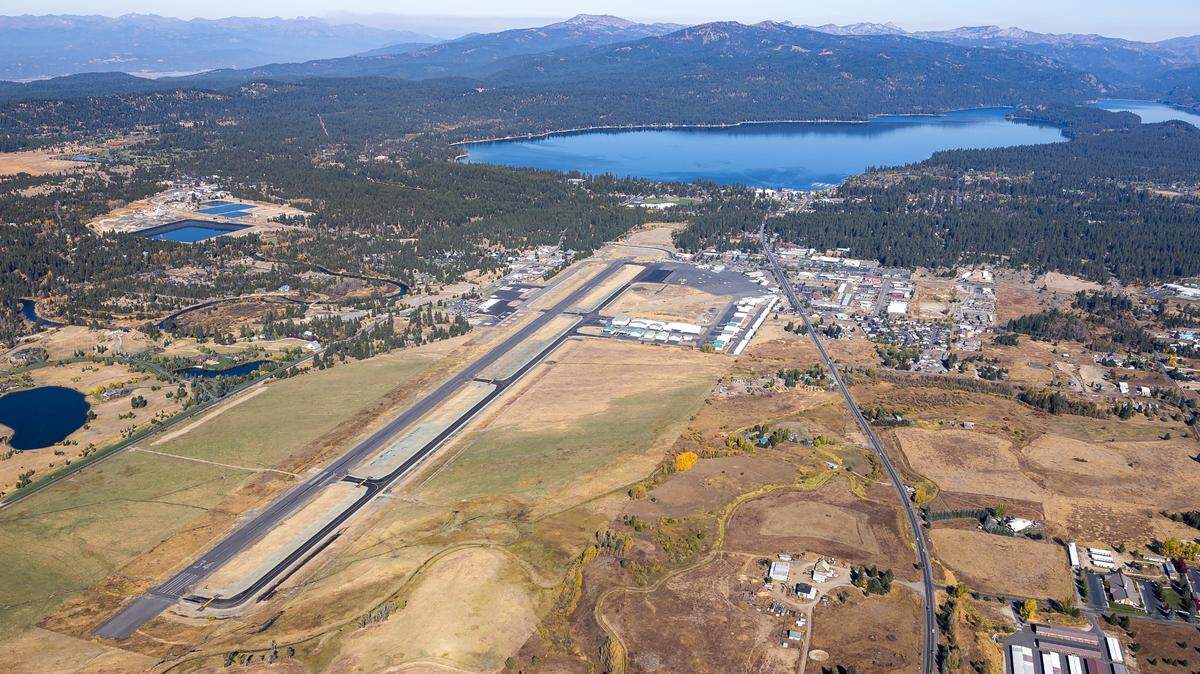
When developers proposed new housing near the McCall Airport in August, it was the last straw on unchecked growth in Valley County, Planning and Zoning Director Cynda Herrick said.
The development, called 360º Ranch, would put homes on newly subdivided parcels of land just south of the airport. The parcels would put homes in the airport’s inner critical zone — a boundary established by aircraft crash data, meant to protect pilots and nearby residents in the event of a crash.
The parcels were just large enough to be split and sold to new owners without review by the county’s Planning and Zoning department. Airport Manager Emily Hart said in the last 20 years, there have been two crashes in the same area where the subdivision is planned.
“(The inner critical zone) is where no airport manager wants to see housing,” Hart said.
Though Planning and Zoning ultimately OK’d the development, Herrick said the situation made it clear that Valley County was facing a dilemma: Too many small tracts of land — around 20 acres or so — were being created without regard for the county’s bigger picture. Often the parcels were sold without determining if they had the groundwater resources for septic systems or roads suitable for emergency vehicle access, county commissioners said.
The new development spurred action from county officials to issue an emergency order, requiring all land subdivisions to go through Planning and Zoning review unless they’re 160 acres or larger. Last month, the commission moved to make a more restrictive version of its emergency order permanent, requiring Planning and Zoning review of any subdivision, regardless of size.
But as county officials moved to slow potentially problematic division of land, they drew opposition from real estate agents and land developers who say there’s demand for unbuildable land. That group included the Texas billionaire Wilks brothers, who own tens of thousands of acres in Valley County.
Now, a Valley County state legislator has proposed a bill that could potentially preempt the county commission’s efforts. The measure would create a statewide subdivision review exemption for parcels as small as 20 acres. Critics of the bill say it could create a boom in poorly planned rural parcels.
Parcel splits raise concerns on flooding
When the Valley County Commission began discussing the possibility of changing its subdivision regulations, Commissioner Sherry Maupin said county residents were “starting to scream for managed growth.”
Maupin and commission Chair Elt Hasbrouck told the Idaho Statesman they created the emergency ordinance in response to increasing concerns about 20-acre parcels. The county’s Planning and Zoning codes only required people to submit plats and complete the Planning and Zoning process for parcels smaller than 20 acres.
The commissioners said some landowners were subdividing their land into 20-acre parcels — the minimum amount allowed without review — only for buyers to learn the land they’d purchased had no winter access or wasn’t fit for septic or other infrastructure necessary for building permits.
“I’m concerned about all the out-of-state buyers that are buying all the 20-acre parcels and think they’re building their dream home,” Maupin said. “A lot of these (properties) don’t even have road access, can never have sewer. Dry cabins is not something the county wants to invest in.”
The county was even sued by one homeowner who learned too late that the road to his new property wasn’t maintained in the winter. The county won the case, but it cost taxpayers about $20,000, Hasbrouck said.
“We felt like people were getting burned, and the county was the fall guy to fix their issues,” Hasbrouck said.
Herrick said her biggest concern was unreviewed parcels within flood plains. Those lots can’t be built on, and violation of the Federal Emergency Management Agency’s rules could affect residents’ ability to get flood insurance or disaster relief funding.
Herrick said parcels are being split off piecemeal, with no rhyme or reason. While she said her department hasn’t yet dealt with a lot of access or building permit complaints, she anticipates there will be more in the future.
“Our point is not to control everything but to guide long-range planning in Valley County,” Herrick said.
Valley County residents split on subdivisions
The commission and county spent months holding public hearings on the issue. Some Valley County residents said they supported increasing the minimum unreviewed acreage to 160 acres, while others were in favor of requiring all subdivisions to undergo review. Proponents said they felt the steps would help the county keep a handle on growth and urban sprawl.
But others, including a local real estate agent and representatives for Wilks-owned DF Development, said the rule would hamstring their ability to meet demand for lots that don’t qualify for building permits. The cost of subdivision applications, soil testing for septic placement and creating necessary infrastructure like roads would only be passed on to buyers, they argued.
Despite the developers’ concerns, the council voted 2-1 to strike the 20-acre minimum exemption from its subdivision regulations altogether, rather than amending the minimum exemption to 160 acres. Hasbrouck, the lone vote in opposition, said he felt the move was too restrictive and could place significant strain on the Planning and Zoning department.
“I felt like it was kind of a kick in the teeth to the bigger landowners,” he said, adding that he expects the rule change will be challenged in the future.
Idaho lawmaker’s bill raises questions
A week before the commission’s final meeting, Rep. Terry Gestrin, R-Donnelly, introduced House Bill 643. The bill, which was touted as a way for landowners to ensure they can pass on property to their families, would include a subdivision planning and zoning exception for any parcel 20 acres or larger, essentially undoing Valley County’s rule change.
The bill was referred to the House Local Government Committee last month, where it appears to have stalled. Rep. Ron Mendive, who chairs the committee, did not respond to requests for comment on the status of the bill.
Gestrin told the Statesman he was concerned by Valley County’s moves to make all subdivisions require county review — especially for families subdividing property to children or grandchildren. He said the review process could be cost-prohibitive for some landowners. He said the bill will begin discussion on subdivision exceptions, even if it takes a year or two for the Legislature to come to a decision on the issue.
An expenditure report filed by lobbyist Suzanne Budge showed she advocated for Gestrin’s bill on behalf of the Wilks brothers.
Idaho environmental groups, including the Idaho Conservation League and Idaho Wildlife Federation, have opposed the bill. They said it could increase the number of homes in wildfire wildland-urban interface areas and affect wildlife habitat and agricultural areas without any oversight.
“We see this leading Idaho down a path we don’t necessarily want to go down,” said Jonathan Oppenheimer, external relations director for Idaho Conservation League.
Wilks reps claim county rule will spur denser growth
Representatives for DF Development, a land development company owned by oil tycoons Dan and Farris Wilks, spent months pushing back against Valley County’s ordinance change. The Wilkses own hundreds of thousands of acres across Idaho and Montana and have sparked outrage in recent years for disputing road easements and shuttering those roads, effectively cutting off access to some public land.
DF Development’s lawyer, Josh Leonard, and Business Development Manager Scott Carlton told commissioners that the ordinance change would scrap the company’s plans for the 70,000 acres it owns in Valley County and potentially cost it up to millions of dollars to comply with the new regulations. To recoup those costs, Carlton said, developers might be more likely to create urban subdivisions with numerous parcels rather than fewer large, rural parcels.
“The proposed amendment will have unintended consequences,” Carlton said in a December commission meeting. “It does not reduce or limit so-called overbuilding. The opposite is true: The proposed amendment will result in many more homes being built.”
Carlton also said the rule change “is likely to prevent DF Development from reopening any roads on its property to the public.”
“There’s no incentive to do so,” he said. “DF Development would face all the problems that accompany public access without getting any of the benefit.”
In a written statement provided to the Statesman last week, DF representatives reiterated the same points.
“Property rights are fundamental to this country and, in particular, to Idahoans,” the statement said. “All levels of government, including counties, should protect citizens’ rights, regardless of who owns the land or how large the parcel.”
More developments to come for Valley County
Though Valley County has put an end to unreviewed land splits, Cynda Herrick said the area will likely feel the impact of the subdivisions for years to come. The McCall Airport is already facing challenges.
Hart, the airport manager, said she’s worried that the 360º Ranch development will affect flight safety, putting residents in danger, too.
The airport is an uncontrolled airspace, which means there is no air traffic control. Most pilots typically land and take off on the runway’s south end, and housing will likely impact their visual flight path, Hart said. She also worries residents will be affected by the noise.
“The majority of traffic that comes to this airport is going to fly right over that subdivision,” Hart said.
Another housing development is also in the works near the airport. This one includes promises to improve wetlands, which could bring more birds — potential flight hazards — to the airport.
Hart said she hopes to work with the county and Idaho Transportation Department’s aeronautics division to develop codes that will prevent further concerns. That kind of planning is exactly what Herrick is hoping for, too.
“We can’t just look at today,” Herrick said. “We have to look at the future.”
This story was originally published March 10, 2022 at 4:00 AM with the headline "Undeveloped land is selling in rural Idaho. Why Valley County wants more oversight."