Idaho has spent millions defending controversial laws — and more are in the pipeline
Jennie McCormack had three children and was living off $200 to $250 a month when she found herself pregnant again in 2010. She was in an abusive relationship, she told the Idaho Statesman on Friday. The 32-year-old Pocatello woman sought an abortion, and needed to travel outside of Southeast Idaho to get one. The closest option was in Salt Lake City. Instead, she ordered a pill online.
A few weeks later, police knocked on her door. She had broken Idaho law, and they had questions about her abortion.
“I said, ‘Why would that matter? It’s my own body,’ ” McCormack said by phone. “I had no clue. I honestly had no clue that I couldn’t choose for myself.”
In May 2011, Bannock County Prosecutor Mark Heideman charged McCormack over self-performing an abortion, which was against an Idaho statute created in the 1970s. McCormack’s charge was dropped over lack of evidence in the Sixth District Court. But McCormack and her attorney, Dr. Rick Hearn, went even further. They challenged the obscure state law in federal court to strike it down altogether — and won.
McCormack changed her name after the case due to the backlash she received about her abortion. The Statesman is choosing not to publish her new name.
Idaho’s legal fees paid to McCormack’s attorneys amounted to $474,334, which came out of the Legislature’s constitutional defense fund. The case became the most expensive lawsuit for the fund since it was created in the 1990s.
But payments over lost abortion cases are far from unusual. In fact, $1.1 million — one-third of the constitutional defense fund — has been used to fight abortion. Another $1 million has been spent fighting cases involving marriage equality. Since 1995, the Legislature has spent $3.2 million from the taxpayer-funded constitutional defense fund to pay for opponents’ legal fees when it loses in court.
And this year, the Legislature is considering two more anti-abortion bills that could face a tough battle in the 9th U.S. Circuit Court of Appeals. Idaho has not won an abortion-related case in the federal appeals court. The Legislature hasn’t won a case paid for by the constitutional defense fund since 1996.
Fetal heartbeat bill, ban on public funds for abortion advance
Two bills on abortion this session could set up more legal challenges for the Idaho Legislature.
House members on Friday approved a bill that would outlaw abortions in the state after a heartbeat is detected. That could be interpreted to be as early as six weeks — which would be earlier than when many women find out they’re pregnant, and effectively ban most abortions.
Blaine Conzatti, head of the Family Policy Alliance of Idaho, who crafted the bill, said it would help set up the question of when to define fetal “viability.” Roe v. Wade in 1973 ruled that the U.S. Constitution protects a woman’s right to an abortion before a fetus is viable. After the first trimester, a state could “regulate” abortions, the court ruled.
The heartbeat bill in Idaho only takes effect if a federal appeals court rules in favor of the policy in another state. The goal, Conzatti said, is to eventually put enough pressure on the U.S. Supreme Court to hear the case. If different federal circuit courts are split on the issue, the Supreme Court justices would be more likely to take it, he said.
“It would be a worthwhile court battle from the state’s perspective to get involved with that favorable court opinion, to do everything we can in the state to defend life once there’s a detectable heartbeat,” Conzatti said by phone Friday.
A 20-week abortion ban in Idaho was thrown out in the 9th Circuit in 2013. Sen. Patti Anne Lodge, R-Huston, who sponsored the heartbeat bill in the Senate, didn’t respond to requests for comment.
Another bill, House Bill 220, would ban state funding to abortions or anyone affiliated with abortion services. Critics on a Senate committee said the bill was too broad and could have unintended consequences.
And if the bill were to move forward, Planned Parenthood of the Great Northwest and Hawaii Islands threatened to sue the state. It could potentially be the third lawsuit involving Planned Parenthood paid for through the constitutional defense fund.
Rep. Bruce Skaug, R-Nampa, who sponsored the bill, said he tried to model his bill off other cases, outside of Idaho, that have been successful. He cited one case from the 9th Circuit, which allowed former President Donald Trump’s administration to limit taxpayer-funded clinics from providing abortion services.
“I don’t want to waste time on a bill that’s not going to pass constitutional muster,” Skaug told the Statesman.
One case with Planned Parenthood totaled $446,526 from the fund in 2008. The fund paid $151,210 for another case in 2017, according to public records from the legislative services office.
Mistie DelliCarpini-Tolman, Idaho director of Planned Parenthood Alliance Advocates, said there’s a strong chance the organization would take legal action if the bill became law because of the broad scope.
DelliCarpini-Tolman said the bill would harm Idahoans, and that more than 7,000 people rely on Planned Parenthood services in the state.
“When abortion providers, including Planned Parenthood, are defunded, it means that the overall community suffers,” she said. “It means less access to birth control, less access to cancer screenings, less access to (sexually transmitted infection) testing and treatment, and overall restricted access to preventive care.”
Rep. Brent Crane, R-Nampa, said he believes both bills would be worth the cost. He said the fetal heartbeat bill would answer the question of viability — and that if someone is pronounced dead when a heart stops beating, an argument should be made that someone is alive when a heart begins.
“I think that’s a question the courts need to answer,” Crane said.
Hearn, McCormack’s attorney, said he believes anti-abortion laws that continue to get passed are just “a political stunt” to get officials reelected.
“The fetal heartbeat bill in Idaho or anywhere else is a sure loser unless the Supreme Court overturns Roe v. Wade,” Hearn told the Statesman.
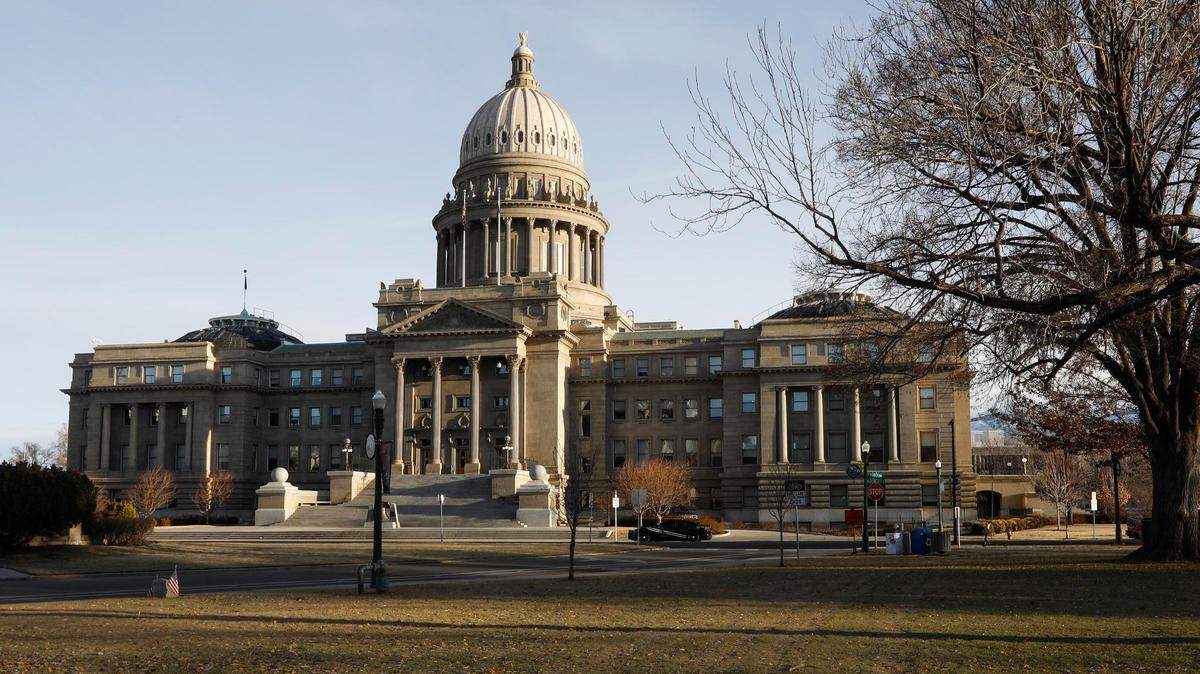
How the constitutional defense fund started
The constitutional defense fund was created in the 1990s to fight the federal government over state rights, said Bruce Newcomb, the former House speaker who helped create the fund.
The first case the fund helped the state fight was over nuclear waste that the federal government was bringing into Idaho. Money from the fund for court losses is approved by the Idaho Constitutional Defense Council, which is composed of the House speaker, Senate pro tem, governor and attorney general.
Critics say the constitutional defense fund has become a slush fund for bills to campaign on during elections and satisfy a politician’s base. Proponents say “pro-life” values are worth fighting, and paying, for.
“I think the Legislature needs to reexamine how that money is spent,” Newcomb said in an interview with the Statesman. “It’s always taxpayers’ money, and you’re responsible for that. … It’s not a blank checkbook.”
House Speaker Scott Bedke said he believes it’s proper for the Idaho Legislature to pay attorney costs arising from legislative actions through that fund.
“I was not around when that was created, and I am following the precedent of those that came before me on that,” Bedke told the Statesman.
House Minority Leader Ilana Rubel, D-Boise, said the constitutional defense fund has been used to fight “culture wars,” and that lawmakers aren’t held accountable for the legal fees that taxpayers ultimately are stuck with. Rubel, an attorney, also criticized Republican leaders for ignoring opinions from the attorney general’s office when counsel warns a bill is unconstitutional.
“It’s an easy way to pass a bill that you can brag about in your primary,” Rubel said, “and ultimately the taxpayers are going to be the ones left holding the bag when it goes down in court.”
Senate President Pro Tem Chuck Winder, R-Boise, said legislators should stand up for what they, and their constituents, believe in.
“I believe that it’s the obligation in the state of Idaho and every other state to protect its citizens. And I believe that that citizenry starts as an infant, as a fetal person that’s growing in a mother’s womb,” Winder told the Statesman. “The few dollars we do spend on legal fees to try and protect people’s lives and protect the sovereignty in our state I think are worth it.”
A group of legal experts, which includes two former attorneys general, recently created a watchdog committee aimed to protect the Idaho Constitution. It’s fighting a bill that would make it significantly more challenging to place a citizen-led initiative on the ballot.
McCormack and Hearn fight Idaho in federal court
McCormack said when she agreed to a fight in federal court over Idaho’s abortion law, she wanted to protect women’s rights in Idaho. It’s upsetting to her, she said, to see new abortion laws still being passed.
But for the court to toss out the entire statute, Hearn needed a doctor who was willing to sue the state over the right to perform abortions. Hearn happened to be a doctor. So he joined the lawsuit as a plaintiff.
Hearn said he grew more passionate about abortion rights after he counseled McCormack.
“Most people in Idaho thought it was totally inappropriate to prosecute and sentence someone up to five years for having an abortion,” Hearn said. “Once I got into it, I saw how defending doctors was essential to guaranteeing women like Jennie have the opportunity to get an abortion.”
Idaho’s fetal heartbeat bill included the prosecution of health care providers who perform or induce an abortion. If a woman wanted an abortion due to rape or incest, she would need to provide a physician a police report about the crime.
Experts and studies have said sexual assaults remain one of the most under-reported crimes. An analysis by the U.S. Department of Justice of violent crime in 2015 and 2016 showed nearly 80% of rapes and sexual assaults went unreported. Doctors who unlawfully perform the abortion would face two to five years in prison.
In McCormack’s case, Idaho ultimately defended the county prosecutor in federal court, and lost.
McCormack on Friday told the Statesman she didn’t have a choice at the time of her abortion. If she had the baby, she said, she believed she never would have been able to get out of the abusive situation.
“It’s heartbreaking,” McCormack said. “Nobody knows each person’s situation. … It should not be up to lawmakers or anybody but that woman.”
This story was originally published April 18, 2021 at 4:00 AM with the headline "Idaho has spent millions defending controversial laws — and more are in the pipeline."