Idaho governor issues another veto — stopping a controversial budget cut
In the waning days of Idaho’s legislative session, the Legislature approved hundreds of thousands of dollars of cuts to a fund that included money for graduate medical education. But it was a decision surrounded by confusion.
When a few lawmakers asked during a meeting of the Legislature’s budget-setting committee if the cuts would affect medical residency spots, Rep. Josh Tanner, R-Eagle, said more than once it would not.
He apparently was wrong, but the budget bill sped through the Legislature anyway and landed on the governor’s desk.
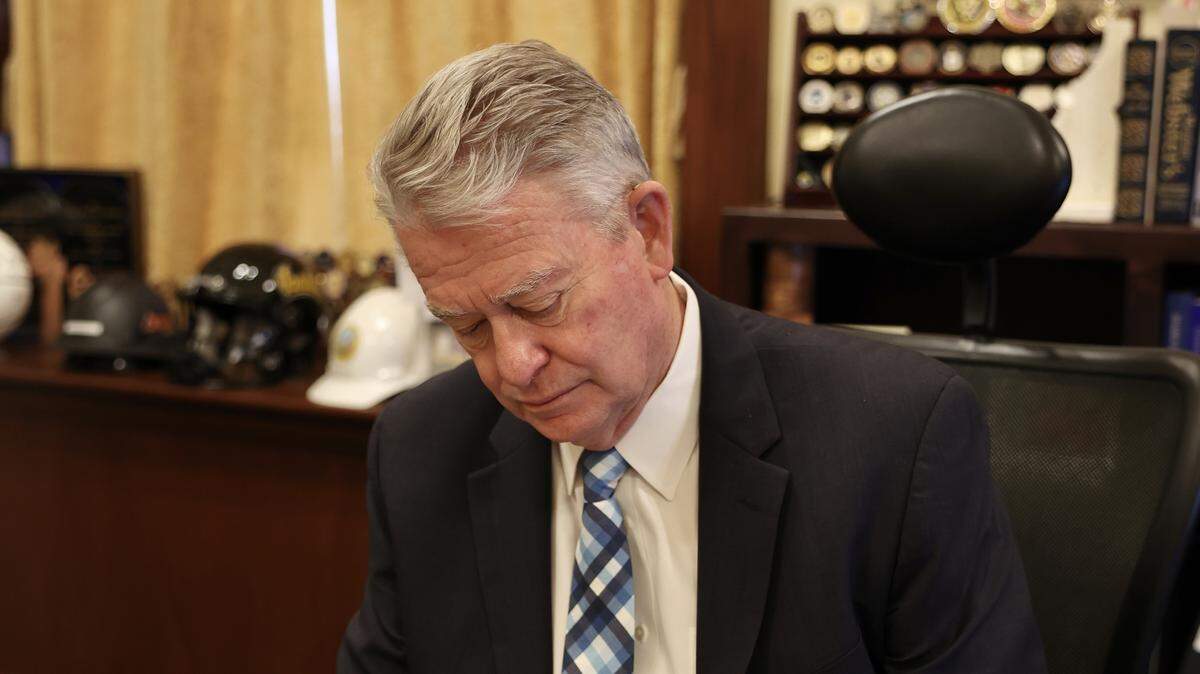
On Friday, Gov. Brad Little issued a line-item veto of that portion of the bill, meaning he simply vetoed that budget cut, but kept the rest of the bill intact. That decision will mean the nearly $479,000 reduction from the Health Care Policy Initiatives Program will not take effect.
AJ McWhorter, spokesperson from the Idaho Department of Health and Welfare, told the Idaho Statesman if the cuts were signed into the law, the department anticipated losing eight graduate medical education seats. The reduction would have also impacted the operation of its Advance Care Directive Registry, which supports older residents and their families, he said.
In his veto letter, Little said Idaho is facing “one of the most severe physician shortages in the nation,” and the graduate medical education program is an important way to address the issue. The reduction would have forced the Department of Health and Welfare to make “drastic program cuts with virtually no warning.”
“Funding to support eight current medical residents would be stripped in the middle of their committed three-year medical residency,” he wrote. “This disruption in funding is extremely problematic. It is not only unjust to the physicians in training and the residency programs we have spent years developing, but also undermines Idaho’s credibility, signaling that the state may not honor its commitments.”
He called for the state to stay committed to strengthening these types of initiatives.
The bill passed the House 34-29 and the Senate 24-11. The Legislature last week adjourned sine die.
Confusion in committee
A Joint-Finance Appropriations committee meeting late in the legislative session spurred uncertainty over what exactly the bill’s proposed cuts would mean.
As the committee discussed the cuts, which also dealt with a number of other areas in the Division of Public Health Services, Sen. Kevin Cook, R-Idaho Falls, asked: “Is there anything in this budget that cuts back on the graduate medical education program at all?”
Sen. Melissa Wintrow, D-Boise, raised the same concerns about the lack of clarity on what the fund does.
“I just feel like I need clarification on that. I can’t vote on a budget if that is where it’s coming out of,” she told committee members. “We already said we are pumping resources into GME and now if we’re kind of sliding in in the 11th hour upstairs when we can barely look at this, I’m going to be troubled.”
She said she couldn’t vote for the measure without that answer.
Shortly after, the committee went at ease for several minutes. When they returned, a substitute motion was made to exclude the cuts to the Health Care Policy Initiatives program, but it failed. The committee then voted on and approved the original motion with the cuts.
Tanner said he had bigger concerns if the fund was being used for graduate medical education.
“There has never been an authorization from this body that has actually given them authority to actually spend that money in those areas,” he said. “If there is money moving out of this one, then we have other issues in the department.”
But McWhorter said in 2017, the Legislature decided to fund some seats through the Department of Health and Welfare to leverage Medicaid matching funds.
On Wednesday, Little issued five other vetoes, including another line-item veto in a budget bill. He similarly used the line-item veto last year on a bill that would have nixed the governor’s emergency fund, intended to be used for crises.